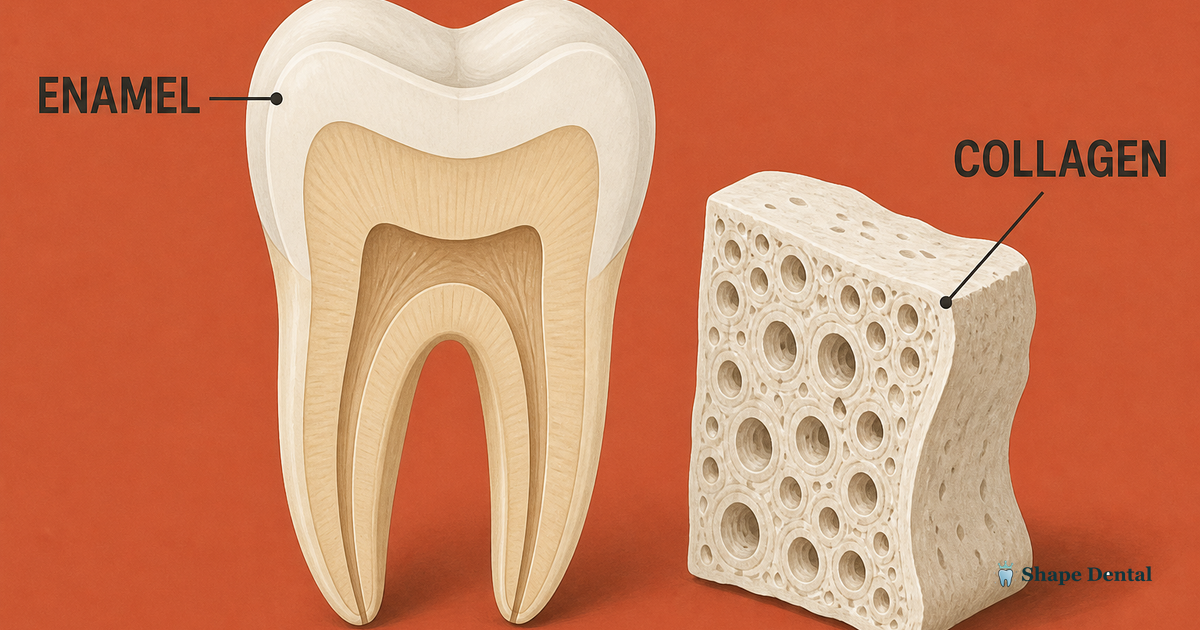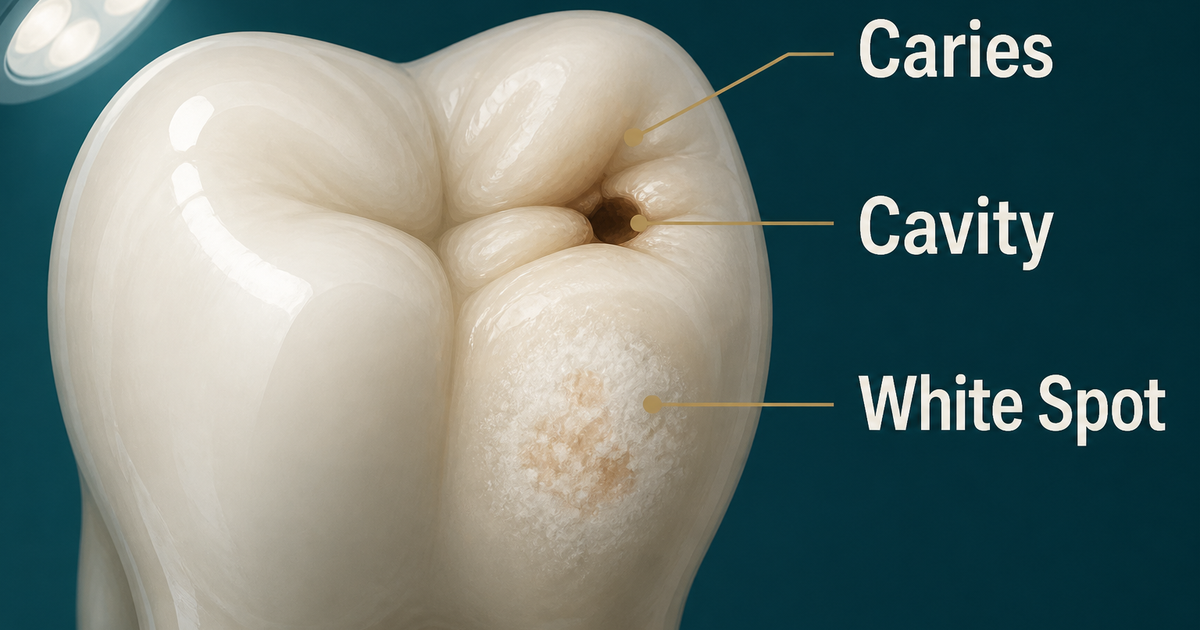
As of July 2026, the earliest answer to what do dental caries look like is simple: they usually start as white, chalky spots on enamel, then can turn tan, brown, or black and feel rough or pitted before they ever hurt. Shape Dental in Georgetown, TX sees this pattern often, and catching it early can make the next step much easier.
Key takeaways
- Early dental caries often look like a chalky white spot, not a hole.
- The first change is usually in tooth enamel, so pain may not show up yet.
- A spot that feels rough, sticky, or pitted is more suspicious than a smooth stain.
- Molars and areas near the gumline hide early decay better than front teeth.
- If you see spreading discoloration or sensitivity, a dental exam is the safest next step.
What dental caries look like in the early stage
Early dental caries usually show up as a faint white patch, then progress to dull brown, tan, or black discoloration, tiny pits, or rough enamel before a person feels pain. That first change happens in tooth enamel, which is why the tooth can look different long before it starts to ache.
On front teeth, the change may look like an opaque spot that does not match the shine around it. On molars, it often hides in chewing grooves or along the biting edge, so a quick mirror check can miss it. If you are asking what does a cavity look like at stage 1, the safest visual clue is a spot that looks chalky instead of glossy.
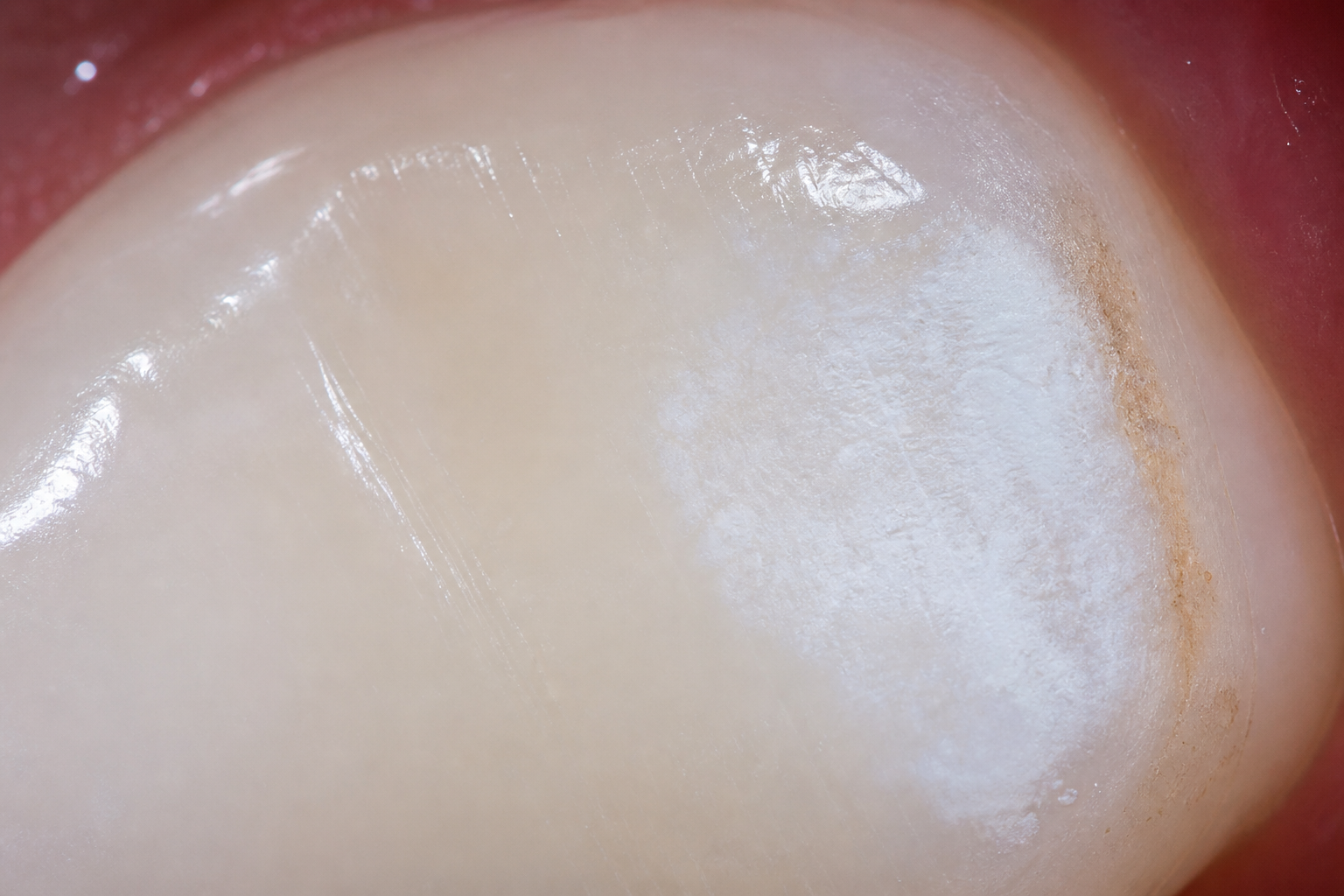
Texture changes can appear before pain begins.
A phone flash photo can help you see what bathroom lighting hides. That is especially true for early enamel changes on back teeth, where shadows make the spot look smaller or flatter than it really is. For a local visual reference, Shape Dental’s guide on early cavity signs fits the same pattern patients are trying to spot at home.
How to tell early tooth decay from harmless stains
Early decay changes both color and texture, while a harmless stain usually stays smooth. If the spot feels chalky, catches floss, or looks softened at the edge, it deserves more attention than a surface mark that brushes away.
The location matters too. A suspicious spot near the gumline, inside a deep groove, or around an old filling is more likely to be tooth decay than simple discoloration. That is why people asking how do you identify dental caries should look at both the color and the surface, not just the shade.
A quick home check can help you decide whether to watch or book a visit:
- Does the spot stay after brushing?
- Does it look rough, dull, or pitted?
- Is it in a groove, between teeth, or near the gumline?
- Has it changed from white to brown or black over time?
If the answer is yes to more than one of those, it is worth a dental exam. Cavities do not always announce themselves with pain first.
Is dental caries just cavities?
Dental caries is the disease process, and cavities are the damaged areas that can result from it. People often use the terms interchangeably, but early caries can exist before a visible hole forms.
That difference matters because early white-spot lesions may be slowed or stopped before they turn into a filling. Once the surface breaks down into a true hole, the tooth is no longer dealing with a cosmetic stain, and home care alone will not rebuild the lost structure.
The American Dental Association, the Cleveland Clinic, and the Mayo Clinic all use patient-friendly language that treats caries, cavities, and tooth decay as closely related terms in everyday education, even though dentists may use them more precisely.
For readers comparing terms, is dental caries just cavities? In casual conversation, often yes. In the chair, the dentist may be talking about decay before the hole forms, which is exactly the stage you want to catch.
What does a cavity look like on different teeth?
Where the decay starts changes what it looks like. On molars, it often begins in the deep chewing grooves, where plaque and food sit longer. On those teeth, a cavity can look like a dark line, a tiny pit, or a chalky area tucked into a groove rather than an obvious hole.
Between teeth, decay may not be visible in a mirror at all. It may show up as a shadow, a rough spot, or a place where floss suddenly catches. Near the gumline, the early change may look like a narrow white band or a soft brown edge.
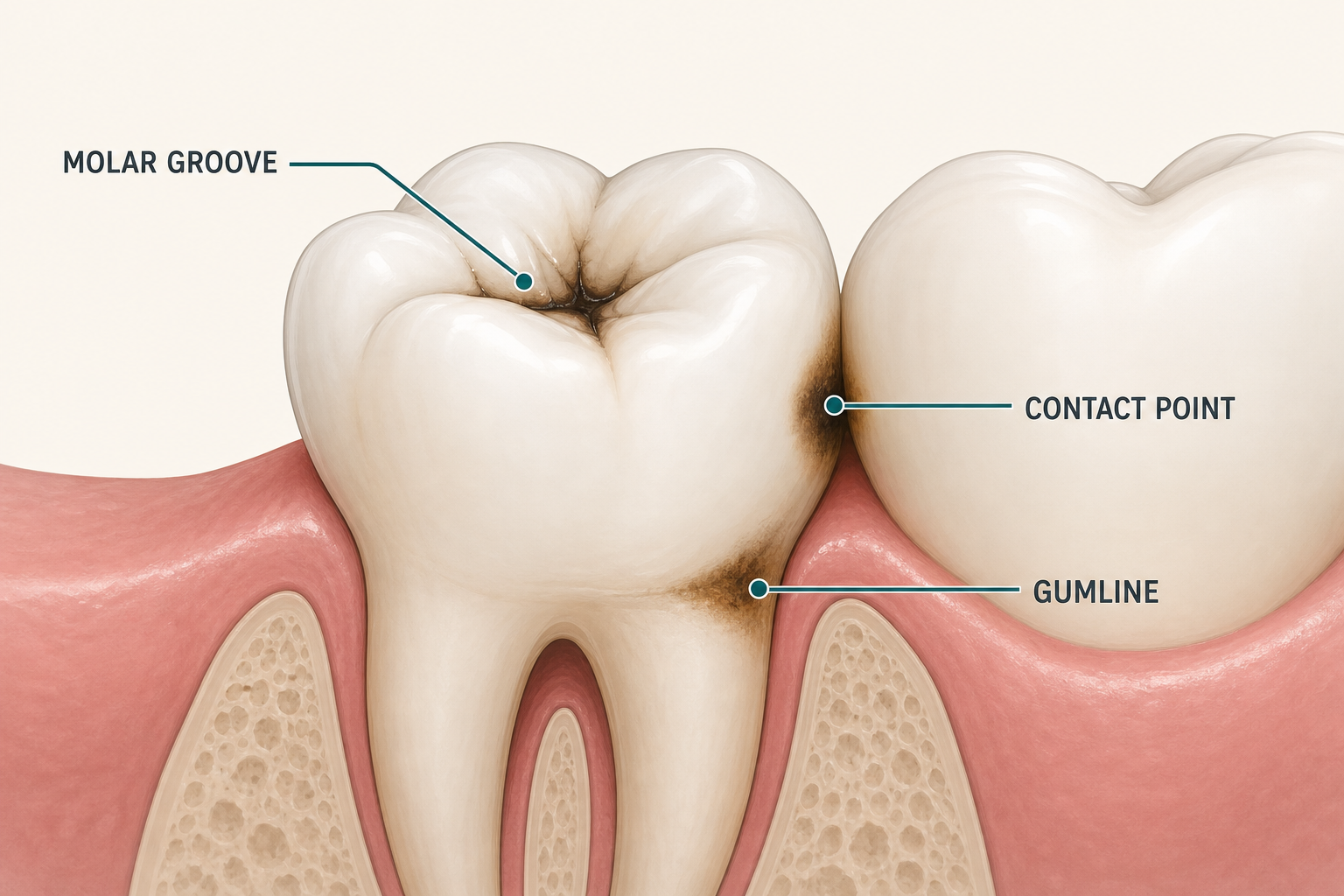
Decay can look different depending on where it starts.
If you want a more complete visual check, dental X-rays can catch decay that hides between teeth or under an old restoration. That is why Shape Dental pairs the visual exam with X-rays and diagnostics when a spot looks suspicious but is hard to inspect directly.
On baby teeth, the same warning signs apply, but the decay can spread faster because the enamel layer is thinner. That is one reason early changes in children should not be dismissed as “just a stain.”
Do dental caries go away?
Early enamel damage can sometimes be slowed or reversed, but a true cavity does not simply disappear on its own. If the surface is only starting to demineralize, fluoride, better brushing, and less frequent sugar exposure may help the tooth recover some strength. If the enamel has already broken into a hole, the tooth needs dental treatment.
That is the practical answer to do dental caries go away. White spots may improve. Cavities do not heal themselves once structure is lost.
This is also why people searching what does a stage 1 cavity look like are getting useful information at the right time. Stage 1 is the point where treatment can still be simpler, cheaper, and less invasive than waiting for pain.
Note: A spot that looks small today can still be active decay. If it spreads, darkens, or becomes sensitive, do not wait for it to “settle down” on its own.
How do dentists fix caries?
Dentists fix caries by matching treatment to depth. A very early lesion may only need monitoring, fluoride support, and better home care. A deeper cavity may need a filling, and advanced damage may call for a crown, root canal therapy, or extraction.
If you are wondering how do dentists fix caries, the first step is usually to confirm how far the decay has reached. X-rays and an exam help reveal spots that do not show up in a bathroom mirror, especially between teeth or under old dental work. Shape Dental’s dental fillings page is the most common next-step example once decay has progressed past the earliest stage.
Dentists also look at the tooth’s strength, not just the hole. A small cavity in a high-stress chewing area may need a different plan than the same-size spot on a front tooth. The goal is to remove the damaged area and protect the tooth before pain or infection starts.
When to get checked right away
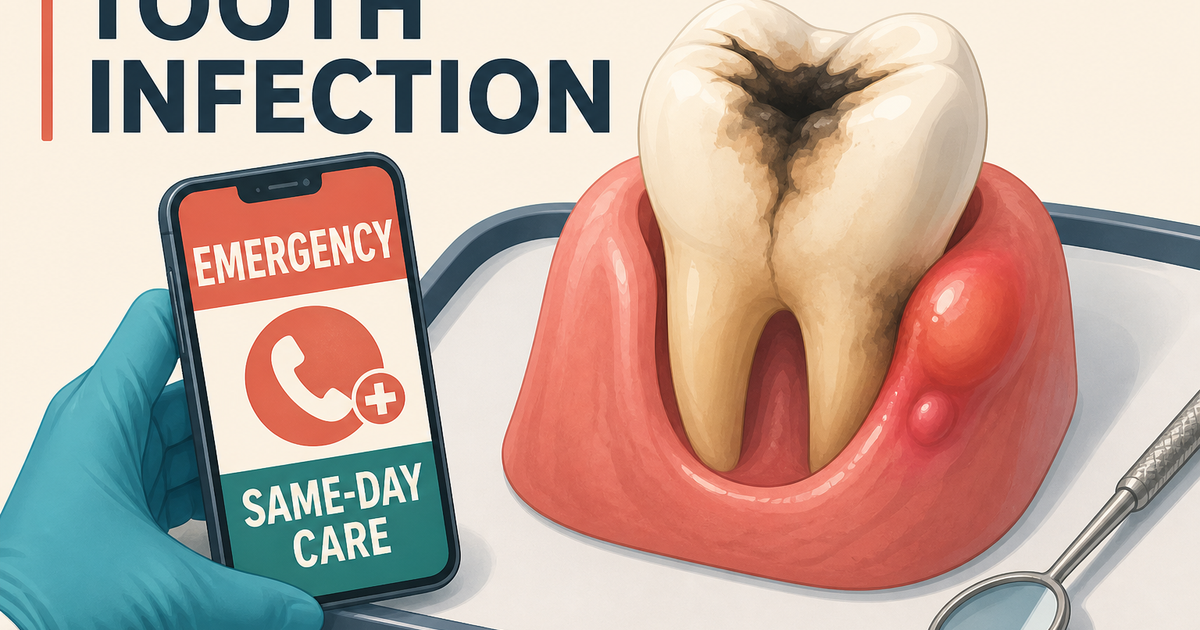
Pain, swelling, lingering sensitivity, a bad taste, or a visible hole mean the problem may already be deeper than early caries. If the tooth throbs, hurts when biting, or feels hot, the risk of infection is higher and you should not wait.
That urgency matters because a spreading tooth infection needs prompt professional care. When the pain is severe or swelling is developing, the safest move is urgent dental evaluation rather than waiting to see whether it settles.
If swelling spreads to the face, you develop fever, or swallowing becomes hard, seek emergency dental or medical care immediately. For same-day help in Georgetown, emergency dental care is the right place to start.
For prevention after treatment or if the tooth is still in the early stage, sealants can help protect deep grooves on molars. That is especially useful for kids, teens, and adults whose back teeth trap plaque easily. Shape Dental also offers dental sealants as a preventive option.
Frequently asked questions
How do you identify dental caries?
You identify dental caries by looking for a spot that is chalky, rough, pitted, or changing from white to brown or black. A dentist can confirm it with an exam and, if needed, X-rays when the decay is between teeth or hidden under the surface.
How do I tell if it's a cavity?
It is more likely a cavity if the spot does not brush off, feels uneven, or keeps changing color. A stain usually stays smooth, while decay often changes texture as well as shade, especially near grooves, the gumline, or old fillings.
What does a stage 1 cavity look like?
A stage 1 cavity usually looks like a white, chalky patch on enamel before a hole forms. It may be easiest to see in bright light or a phone flash photo, and it often shows up on molars or near the gumline first.
Will a cavity heal itself?
A cavity will not heal itself once a hole has formed. Very early enamel changes can sometimes be slowed or remineralized, but visible breakdown in the tooth needs professional care.
What is a pimple inside lip?
A pimple inside lip is not usually a dental caries sign, and it should be checked separately from tooth decay. It can come from irritation, a blocked gland, or a sore spot, which is why mouth lesions and tooth spots should not be mixed together.
What does a fever blister look like?
A fever blister usually starts as a tingling spot, then becomes a small blister on or around the lip, not on the tooth enamel. If the issue is on the lip rather than the tooth, it points to a different cause than dental decay.
How to get rid of canker sores?
How to get rid of canker sores depends on the cause, but they are not the same thing as caries. Mouth rinses, avoiding acidic foods, and protecting the sore from irritation may help, yet a dentist or medical clinician should check sores that are large, repeated, or slow to heal.