Last updated: 2026-09-05
As of September 2026, the short answer is no: teeth are not bones, and the difference shows up in how enamel wears down without self-repair while bone keeps remodeling after injury. If you want the practical version, teeth are mineralized structures with a living core, while bones are living connective tissue that constantly remodels. For a broader tooth-count breakdown, see our guide on how many teeth humans have.
Key takeaways
- Teeth are not bones, even though both contain calcium and phosphate.
- Teeth are better thought of as mineralized organs with enamel, dentin, cementum, and a living pulp.
- Bone tissue remodels continuously; enamel does not regenerate once it is damaged.
- A black spot on a tooth, a chip, or rotting teeth should be checked early because the damage will not heal on its own.
- A DDS can protect the remaining tooth structure with preventive or restorative treatment before decay reaches the pulp.
Are teeth considered bones or organs?
Teeth are not bones; they are mineralized organs, and they are not part of the 206 bones in the skeletal system. They also do not develop from the same embryonic tissue as bone. That is why the answer to “are teeth bones or organs” is no for bones and yes for organs, in the practical anatomical sense. Teeth are anchored in the jaw, but anchored does not mean classified the same way.
To put it plainly, bones belong to the skeletal system, while teeth function at the front end of digestion by cutting, grinding, and helping prepare food for swallowing. Their outer shell is enamel, which has no living cells, while the inside contains a living pulp with nerves and blood vessels. The National Institute of Dental and Craniofacial Research explains that teeth and bones look similar in some ways, but they are built differently and behave differently (NIDCR).
Teeth are also not just “hard parts of the mouth.” They are specialized structures with a role, a shape, and a lifespan that are different from skeletal tissue. That is why are teeth organs is a fair question, but are teeth bones is not the right classification.
What are teeth made of compared to skeletal bones?
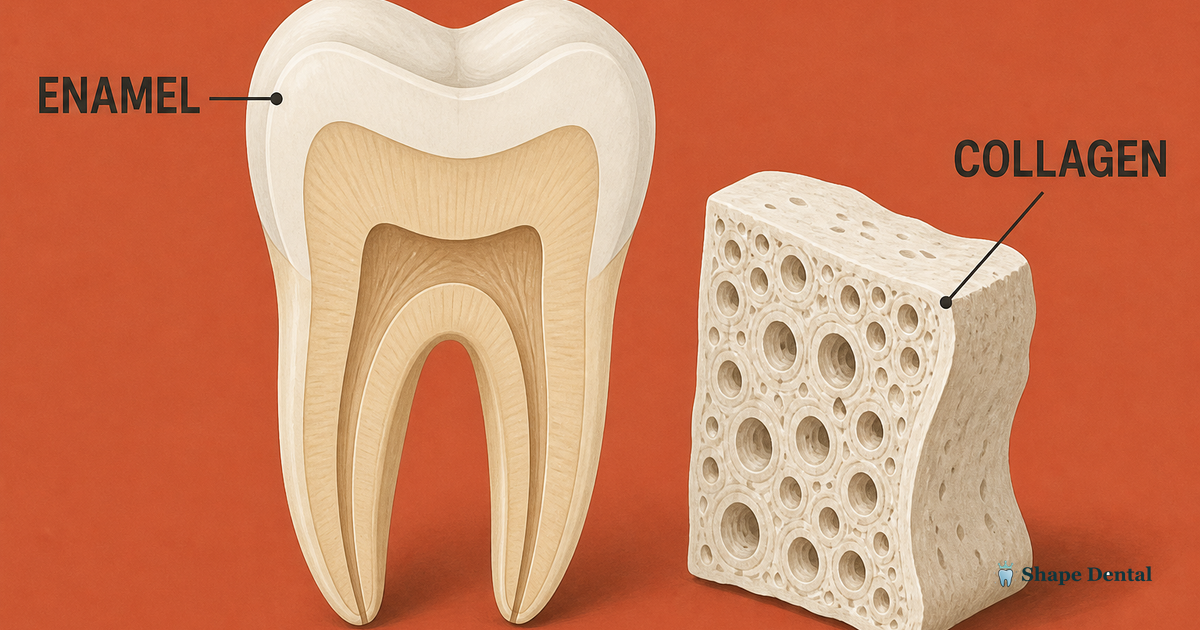
Teeth are made of enamel, dentin, cementum, and dental pulp, while bones are built from a collagen framework reinforced by mineral crystals. Enamel is the outer layer and the hardest tissue in the human body, while dentin gives the tooth most of its shape and support.
Here is the useful breakdown. Enamel is the outer layer and the hardest tissue in the human body. Dentin sits underneath it and gives the tooth most of its shape and support. Cementum covers the root and helps attach the tooth to the surrounding ligament. Dental pulp is the soft inner tissue that carries nerves and blood vessels.
Bone tissue is different. It contains living cells, including osteoblasts and osteoclasts, plus marrow and a collagen matrix that makes it strong but still a little flexible. Teeth have collagen in their deeper layers, but enamel itself is mostly mineral. A comparison of these structures shows why the question “what are teeth and bones made of” has two very different answers.
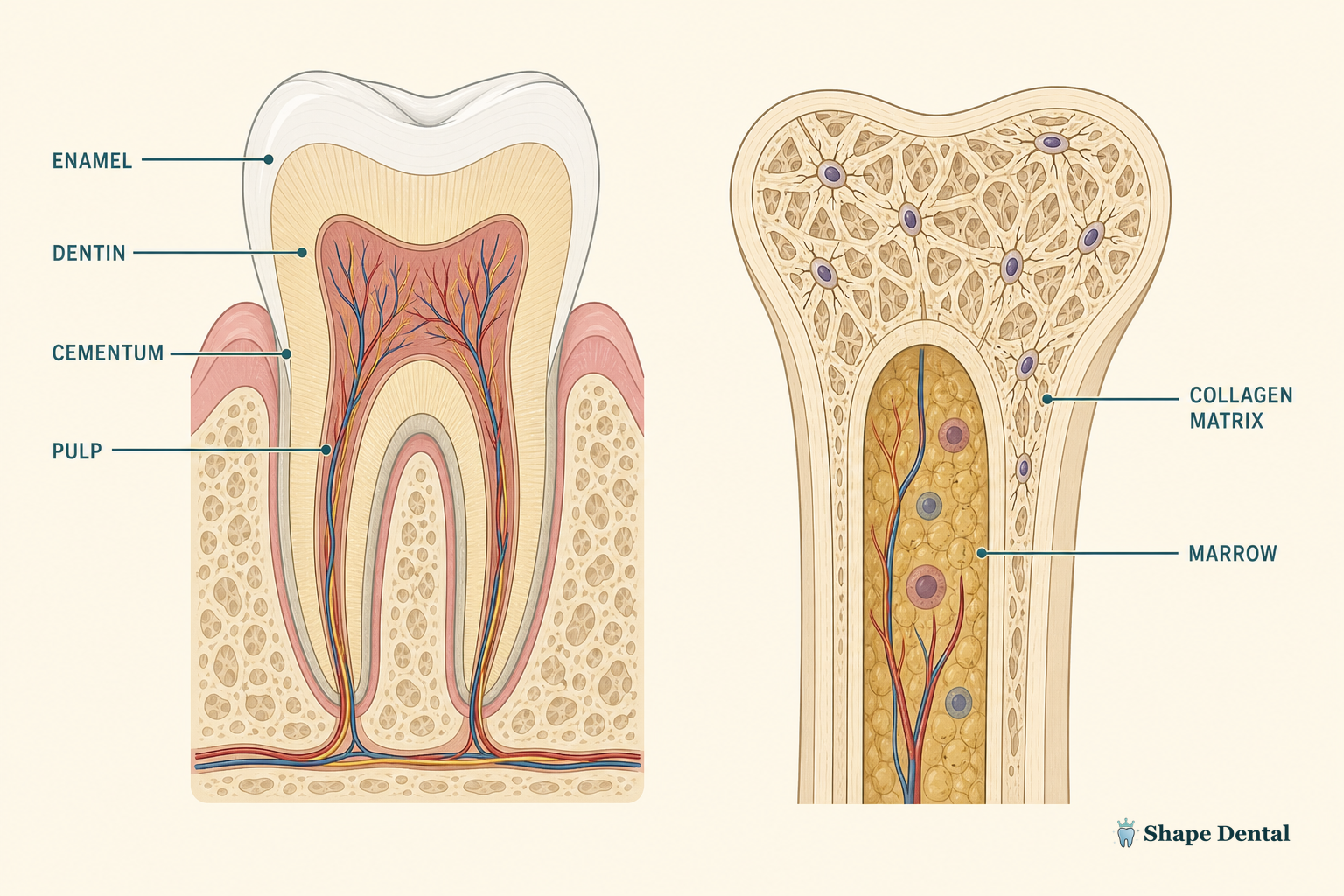
This diagram highlights the structural differences that make teeth unable to self-repair like bones.
Note: If you hear someone call teeth “bone-like,” that is usually shorthand for their mineral content, not a medical classification.
| Feature | Teeth | Bones |
|---|---|---|
| Main role | Cutting, grinding, chewing | Support, movement, protection |
| Main system | Digestive role | Skeletal system |
| Outer layer | Enamel | Compact bone and periosteum |
| Living tissue | Pulp inside the tooth | Living cells throughout |
| Repair | Limited, mostly clinical | Continuous natural remodeling |
| Blood supply in hard outer layer | None in enamel | Yes |
If you want a more visual look at decay and surface breakdown, our page on what cavities look like is a helpful next step.
Which is harder, a tooth or a bone?
A tooth is harder than a bone, but a bone is tougher in the sense that it bends and absorbs force better. That is the core trade-off behind the question “are teeth stronger than bones.” Enamel is extremely mineral-dense, so it resists wear very well, but it can also chip or crack when the force is sharp or the surface is weakened.
Bone has a different job. Its collagen-rich structure gives it more flexibility, which helps it handle impact. Enamel, by contrast, is designed for long-term chewing wear, not for flexing. So yes, enamel is harder than bone, but harder does not mean more durable in every situation.
This matters in everyday life. Acidic drinks, frequent snacking, grinding, and nighttime clenching can all wear down or fracture enamel faster than most people expect. Once that surface layer is gone, the tooth does not grow it back. That is one reason why the phrase “why are teeth not bones” keeps showing up in searches: the answer is built into how the tissues are designed.
Teeth vs. bones: A side-by-side comparison
Teeth and bones share minerals, but they differ in structure, repair, and function in ways that are easy to miss until something breaks.
| Criterion | Teeth | Bones |
|---|---|---|
| Body system | Digestive role | Skeletal system |
| Primary minerals | Hydroxyapatite concentrated in enamel | Hydroxyapatite within a collagen matrix |
| Living cells in hard outer layer | None in enamel | Yes, throughout bone tissue |
| Blood supply | Pulp inside, not enamel | Rich blood supply |
| Remodeling | No true self-regrowth of enamel | Continuous remodeling |
| Common damage | Chips, cracks, cavities | Fractures, breaks |
The key distinction is repair. Bone can knit itself back together after a fracture because it is living tissue with a built-in repair process. Teeth can only remineralize early surface changes to a point; once enamel is physically lost, the body does not replace it. That is why a tooth can need a filling or crown while a broken bone can often heal on its own.
Why broken bones can heal, but damaged teeth cannot
Damaged enamel cannot heal the way bone does because enamel has no living cells to rebuild it after eruption. Bone healing works because the body sends cells, blood supply, and repair signals to the break site. Enamel does not have that setup.
In bone, the repair process forms a callus and then remodels the area over time. In a tooth, the outer surface is inert once it is fully formed. Fluoride and saliva can help early demineralization recover a little mineral, but they cannot restore a missing chunk of enamel or reverse a cavity that has already opened into the tooth structure.
That is why early treatment matters. A small chip or a faint white spot may look minor, but it can become a larger cavity if the breakdown keeps going. If you want to see how those early changes can progress, read what dental caries look like.
Warning: A cracked cusp, a dark pit, or sensitivity that lingers can mean the problem has moved beyond the enamel and closer to the pulp.
Why this distinction matters for your everyday oral health
Because teeth do not self-repair, daily protection and early care are the difference between a small fix and a bigger one. That is why dentists pay such close attention to surface wear, enamel thinning, and tiny spots of decay during routine visits.
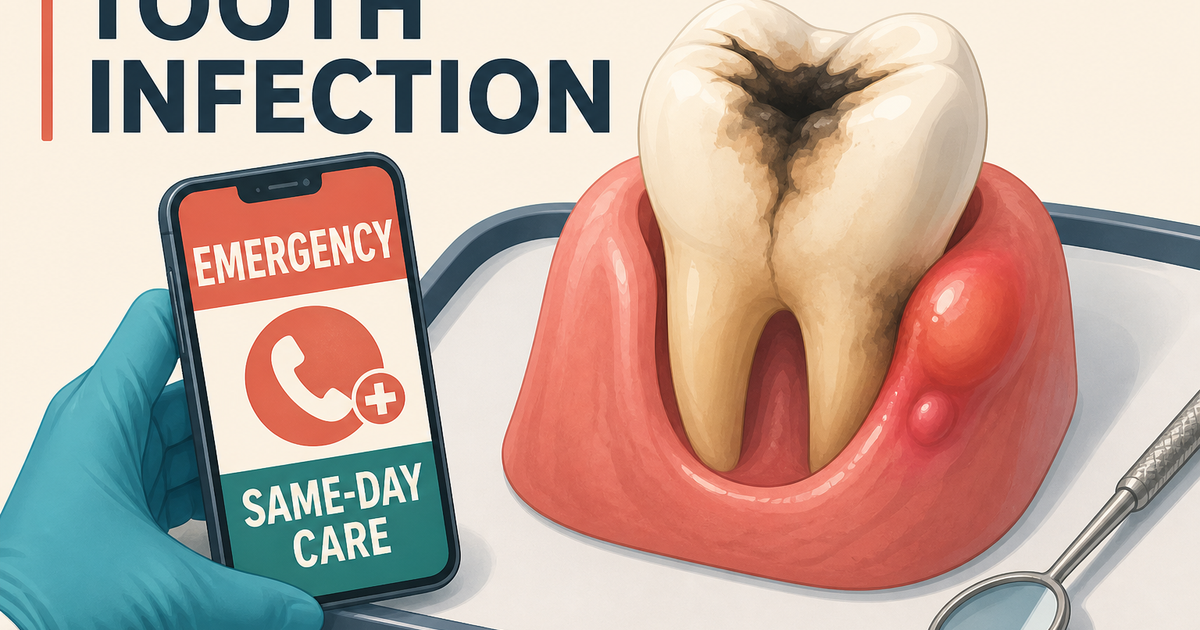
A black spot on tooth enamel can be staining, but it can also be early decay. Rotting teeth is not just a dramatic phrase. It usually means bacteria have already started breaking down the tooth surface, and the damage will not stop unless it is treated. If you see a spot, feel roughness, or notice sensitivity to cold or sweets, it is worth getting checked before the problem reaches the living pulp.
That is also where the meaning of DDS comes in. DDS stands for Doctor of Dental Surgery, and a DDS uses exams, X-rays, and clinical judgment to spot changes before they become pain. If you are unsure what a DDS is looking for during a visit, the short answer is simple: early signs of decay, gum changes, cracks, and anything that suggests the tooth structure is weakening.
For families in Georgetown, that usually means staying ahead of problems instead of waiting for pain to force the issue. Same-day help matters when a tooth is chipped, painful, or showing signs of infection, because the structure will not rebuild itself after damage begins. If pain is already part of the picture, our guide on when to call today for dental pain explains when not to wait.
The practical takeaway is straightforward: protect enamel early, because once it is gone, the body does not grow it back.
Frequently asked questions
Are teeth in the bone family?
No, teeth are not in the bone family. They share minerals with bone, but they are classified differently because they develop differently, function differently, and repair differently.
Do teeth count as 206 bones?
No, teeth do not count as part of the 206 bones in the adult human skeleton. They are separate anatomical structures, even though they sit in the jaw and connect firmly to the surrounding bone.
What destroys teeth the most?
Acid from bacteria, frequent sugar exposure, grinding, and untreated decay do the most damage over time. These forces wear down enamel faster than it can be protected or remineralized.