If you have a pimple inside lip bump, it is most often an oral mucocele, not a true pimple. The usual clue is a smooth, clear, bluish, or white bump on the inner lip. Last updated: 2026-07-19.
Key takeaways
- A pimple inside the lip is most often a mucous cyst, also called an oral mucocele or lip mucocele.
- Canker sores are ulcers, not bumps, and fever blisters usually show up on or near the lip border rather than deep inside the mouth.
- A cavity does not form a lip bump; it shows up on the tooth as a white spot, brown area, pit, or hole.
- Do not pop a mucous cyst at home, because repeated trauma can keep it coming back.
- If the bump lasts more than two weeks, keeps growing, or comes with fever, swelling, or drainage, get it checked promptly.
Pimple inside lip: what it most likely is
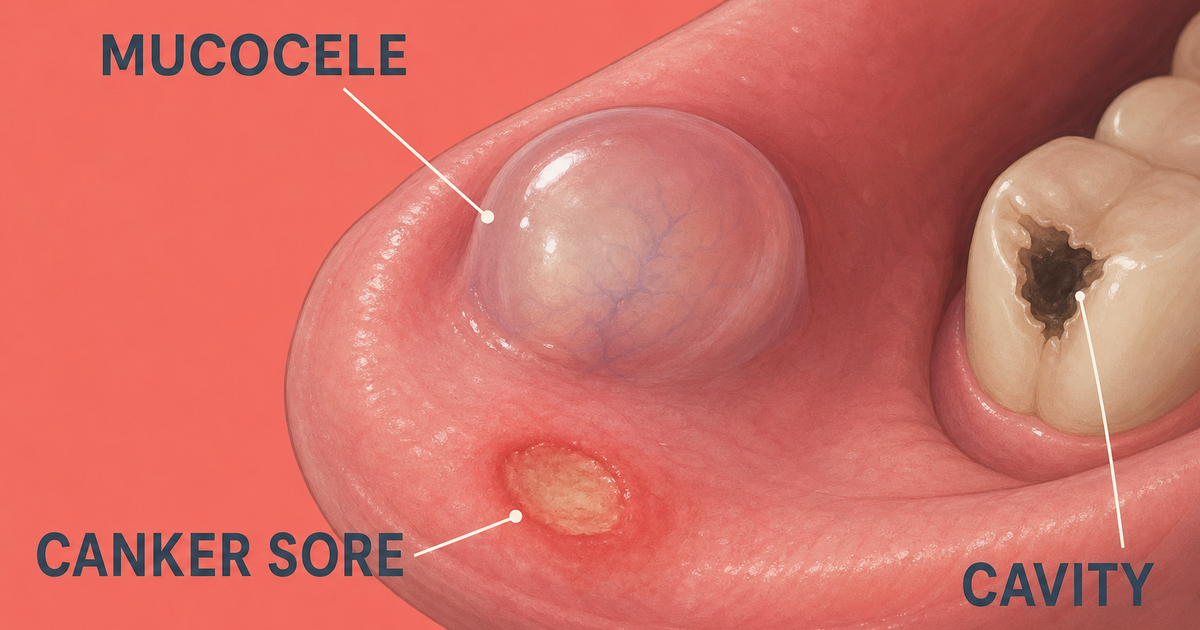
A pimple inside lip bump is most often a mucous cyst, also called an oral mucocele or lip mucocele, rather than a skin-style pimple. The usual clue is the location: it sits on the inner lip, often the lower lip, and it feels soft or squishy instead of hard or crusted.
A typical oral mucocele can look clear, bluish, translucent, or even white if light is hitting it a certain way. It may get smaller, then swell again, especially if the lip keeps getting bitten. That stop-start pattern is one reason people keep searching the term pimple inside lip and wondering why it does not behave like acne.
The main look-alikes are a canker sore, a cold sore, and, less commonly, a tooth problem that makes nearby tissue feel sore. A canker sore is usually an ulcer with a raw center, not a dome-shaped bump. A cold sore, or fever blisters, usually clusters on the lip edge or skin around the mouth, not deep on the inner lip.
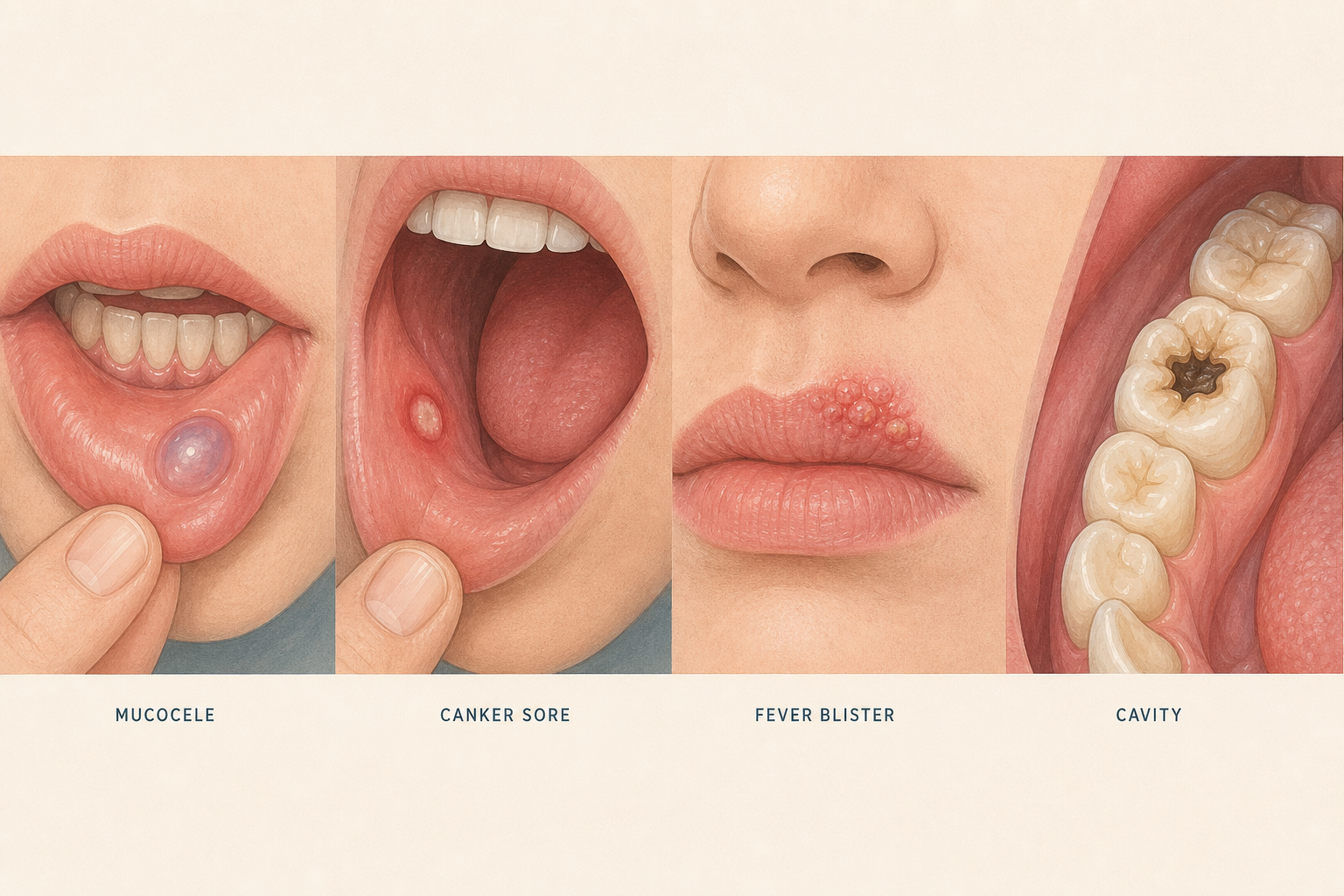
Location and surface are the fastest clues when you compare common oral look-alikes.
If the spot is painful, growing, or still there after about two weeks, it is worth an exam. This page is for fast pattern recognition, not a replacement for a dentist who can look closely and tell whether you are dealing with oral mucocele, canker sore, cold sore, or something tooth-related.
What a mucocele looks and feels like
An oral mucocele is a mucus-filled bump that forms when a minor salivary gland gets blocked or injured. It is common on the inner lower lip, especially after lip biting, cheek chewing, or other small trauma that keeps repeating.
Most mucoceles are smooth and dome-shaped. They can feel painless, mildly tender, or annoying when you talk or chew. Some rupture on their own and then refill, which is why people may think they are dealing with a stubborn pimple inside lip when the pattern is really a tiny salivary gland injury.
You may also see the terms mucous cyst, lip mucocele, mucocele lower lip, or oral mucocele online. Those are closely related labels for the same basic problem. The key difference from a skin infection is that the bump is usually filled with mucus, not pus, and it does not act like a draining boil.
Example: A teenager who keeps biting the same spot on the lower lip may notice a soft clear bump that disappears for a day and then reappears after lunch. That pattern fits an oral mucocele better than acne.
Is a mucocele an STD?
No, a mucocele is not an STD. It is usually caused by local trauma, such as biting the lip, or by a blocked salivary duct.
That matters because a clear bump inside the lip is not automatically herpes, and it is not the same thing as fever blisters. Fever blisters are cold sores caused by herpes simplex virus, which tend to show up on the lip border or nearby skin and often start with tingling before they blister.
If bumps are recurrent, clustered, or happen with other symptoms, a clinician should still look at them. The goal here is not to overreact or to assume the worst. It is to separate a common oral mucocele from a different problem that needs different care.
How do I tell if it's a cavity?
A cavity is on the tooth, not the lip, so the first clue is location. If the bump is on the inner lip, a cavity is unlikely to be the direct cause, even if the tooth beside it also needs attention.
When people ask what do a cavity look like or what do dental caries look like, the usual signs are a white chalky spot, brown or black discoloration, a pit, rough enamel, or a visible hole on the tooth surface. Early tooth decay can also show up as a dull, opaque area before a true hole forms. For a visual comparison, see our guide on what cavities look like.
Dental caries may hurt with sweets, cold drinks, or biting pressure. They do not usually create a smooth bump inside the lip. If the pain feels centered in a tooth, that is a dental problem, not a lip-skin problem, and it deserves a proper exam.
| Clue | Lip mucocele | Cavity or dental caries |
|---|---|---|
| Where it appears | Inner lip, often lower lip | Tooth surface |
| Shape | Smooth dome or bubble | Spot, pit, hole, or rough edge |
| Color | Clear, bluish, translucent, or white | White spot, brown, or black area |
| Feel | Soft, squishy, sometimes tender | Tooth sensitivity or biting pain |
| Main concern | Blocked or injured salivary gland | Enamel breakdown and decay |
What does a stage 1 cavity look like?
A stage 1 cavity often starts as a white spot lesion, which means the enamel has begun to lose minerals. The surface can still look intact, so it may be easy to miss without a dental exam or x-rays.
That early stage matters because it is not the same as a lip bump, even when the mouth feels irritated in the same general area. If the tooth next to the sore spot looks chalky, rough, or discolored, the issue may be early decay rather than a simple oral mucocele.
Early decay can often be treated before it becomes a larger problem, which is why prompt evaluation helps. Once a true cavity has formed, it does not just disappear on its own.
Can I pop a mucous cyst on my lip?
No, you should not pop a mucous cyst on your lip yourself. Squeezing or poking it can cause bleeding, worsen irritation, and keep the gland trauma going.
Repeated biting, picking, or trying to drain it can make the bump more persistent. If the area is irritated, use gentle care instead: avoid chewing that side, skip spicy or acidic triggers for a bit, and rinse with warm salt water if it feels sore.
A dentist can confirm whether it is a mucous cyst and talk through treatment if it keeps coming back or gets in the way of eating or speaking. If you are also wondering how to get rid of a pimple inside your lip, the answer starts with getting the diagnosis right, because the treatment depends on what it actually is.
Tip: Do not confuse a stable, clear inner-lip bump with a skin blemish. If it is smooth, soft, and linked to lip biting, home squeezing usually makes it last longer, not shorter.
How to get rid of canker sores and fever blisters
Canker sores and fever blisters are not the same thing, and they do not respond to the same approach. A canker sore is an aphthous ulcer inside the mouth, while a fever blister is a cold sore caused by herpes simplex virus and usually appears on or near the lip border.
If you are trying to figure out how to get rid of canker sores, the practical approach is to reduce irritation, keep the mouth clean, and manage pain while the sore heals. Mild salt-water rinses can help some people feel better, but they do not turn a canker sore into a mucocele treatment. The useful part is comfort, not cure.
Canker sores often heal within one to two weeks. Fever blisters may crust, then return later. Because the cause is different, a remedy that soothes one problem may do little for the other.
For patients who want a broader prevention routine, our guide to dental habits that protect your smile for life covers the kind of gentle daily care that helps limit irritation and decay.
When to see a dentist or doctor right away
Get prompt care if the bump is rapidly enlarging, very painful, bleeding often, lasting longer than two weeks, or coming with fever, pus, facial swelling, or trouble swallowing.
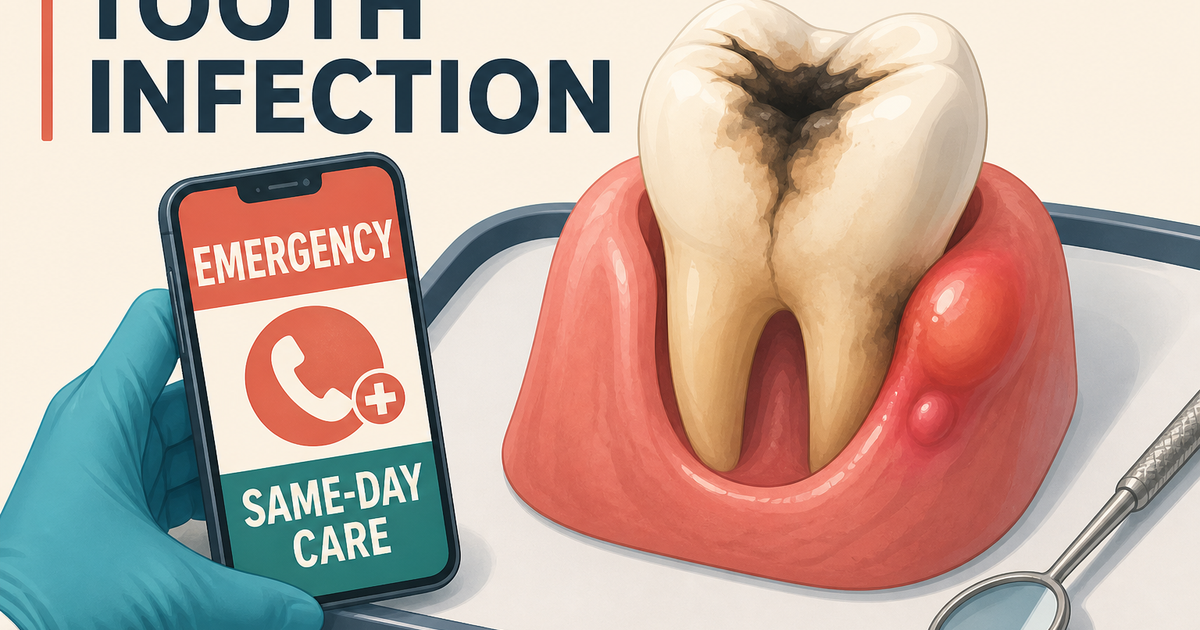
A tooth infection is not something to watch and wait on. If tooth pain, swelling, or drainage is part of the picture, the safest move is urgent dental evaluation, not home treatment. For more detail, read our page on how long until a tooth infection kills you.
A true dental infection usually causes tooth-centered pain, swelling, or drainage rather than a simple inner-lip bump, but symptoms can overlap. If you need same-day help, our local team also explains when to call the dentist in a dental emergency and offers emergency dental care in Georgetown, TX.
What a dentist can do next
A dentist can look at the bump, check nearby teeth and gums, and decide whether it is a mucocele, canker sore, cold sore, or tooth problem. That visit also lets the dentist check for dental caries, gum issues, or an infection that may be referring pain into the lip area.
If the bump keeps returning, treatment may be as simple as monitoring, or it may involve removing the source of repeated irritation. If the tooth beside it is the real issue, a filling or other restorative treatment may be the next step, not lip treatment at all. In that case, our tooth fillings page explains one common fix.
Most people do not need to guess between a pimple inside lip, a canker sore, a cold sore, or early tooth decay for long once someone looks closely.
Frequently asked questions
Will a cavity heal itself?
No, a true cavity will not heal itself once a hole has formed in the tooth. Early enamel demineralization can sometimes be reversed before a cavity breaks through the surface, but a real cavity needs dental treatment.
What is a non-STD bump on your lip?
A non-STD bump on your lip is most often an oral mucocele, lip irritation, or a small injury from biting or friction. Less often, it can be a canker sore nearby or another lesion that needs a dentist or doctor to check.
How do I get rid of a pimple inside my lip?
The safest first step is to avoid squeezing it, reduce lip trauma, and watch whether it shrinks or returns. If it lasts more than two weeks, gets larger, or becomes painful, a dentist should confirm whether it is a mucous cyst, canker sore, cold sore, or a tooth-related issue.