Last updated: 2026-07-16
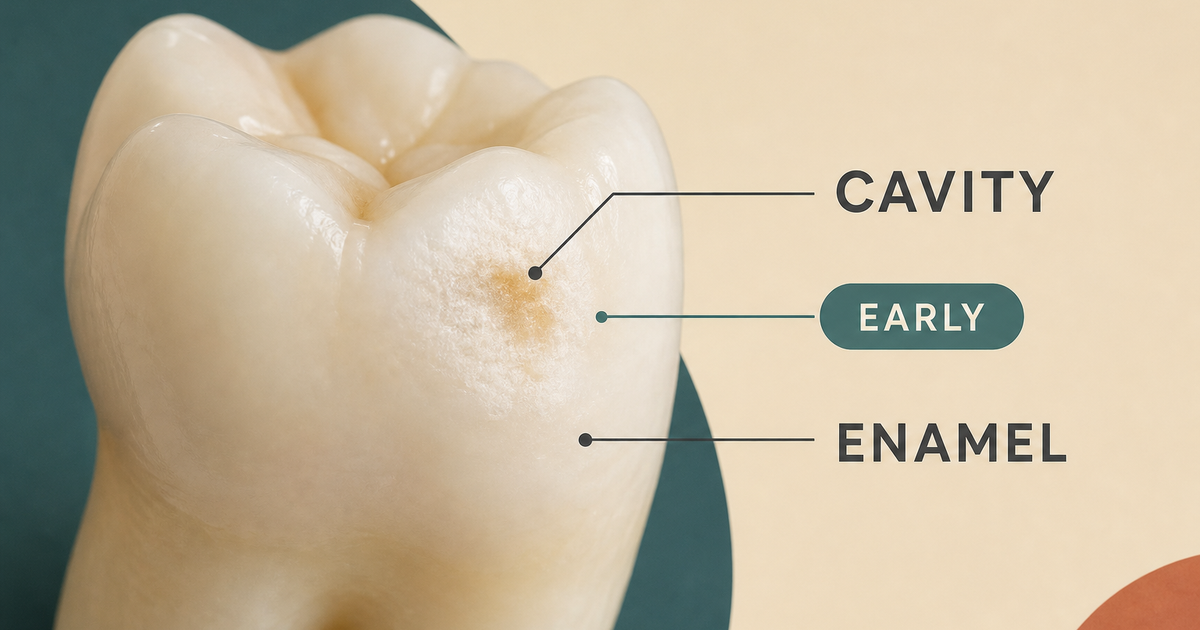
For a Georgetown family, an early cavity usually shows up as a chalky white spot, a faint brown or yellow patch, or a rough area on enamel before there is a hole. That small change matters because tooth decay can start quietly, and a quick exam can catch it before it turns into pain or a filling.
Key takeaways
- Early cavities usually look like white, brown, or yellow changes on enamel before they become a hole.
- A true cavity is dental caries, which is tooth decay that has begun damaging the tooth structure.
- Molars can hide early decay in grooves, so a small dark line or pit should not be ignored.
- A spot that does not brush off, keeps changing, or causes sensitivity should be examined by a dentist.
- A true cavity will not heal itself once the surface breaks down, even if very early enamel changes can sometimes be stopped.
What do cavities look like?
A cavity usually starts as a small visual change on the tooth surface, not a dramatic hole. In the earliest stage, you may see a chalky white spot, a dull patch that looks different from the rest of the enamel, or a subtle brown or yellow area that does not wipe away. According to the American Dental Association and the Cleveland Clinic, tooth decay can begin before pain shows up, which is why visual changes matter so much.
The first thing to know is that what do cavities look like can vary by tooth and by stage. On a front tooth, the change may be easier to see as discoloration. On a back tooth, it may look like a tiny pit, a rough edge, or a dark line in a groove. If the spot is new, fixed in one place, and does not brush away, it deserves a dental exam instead of a guess at home.
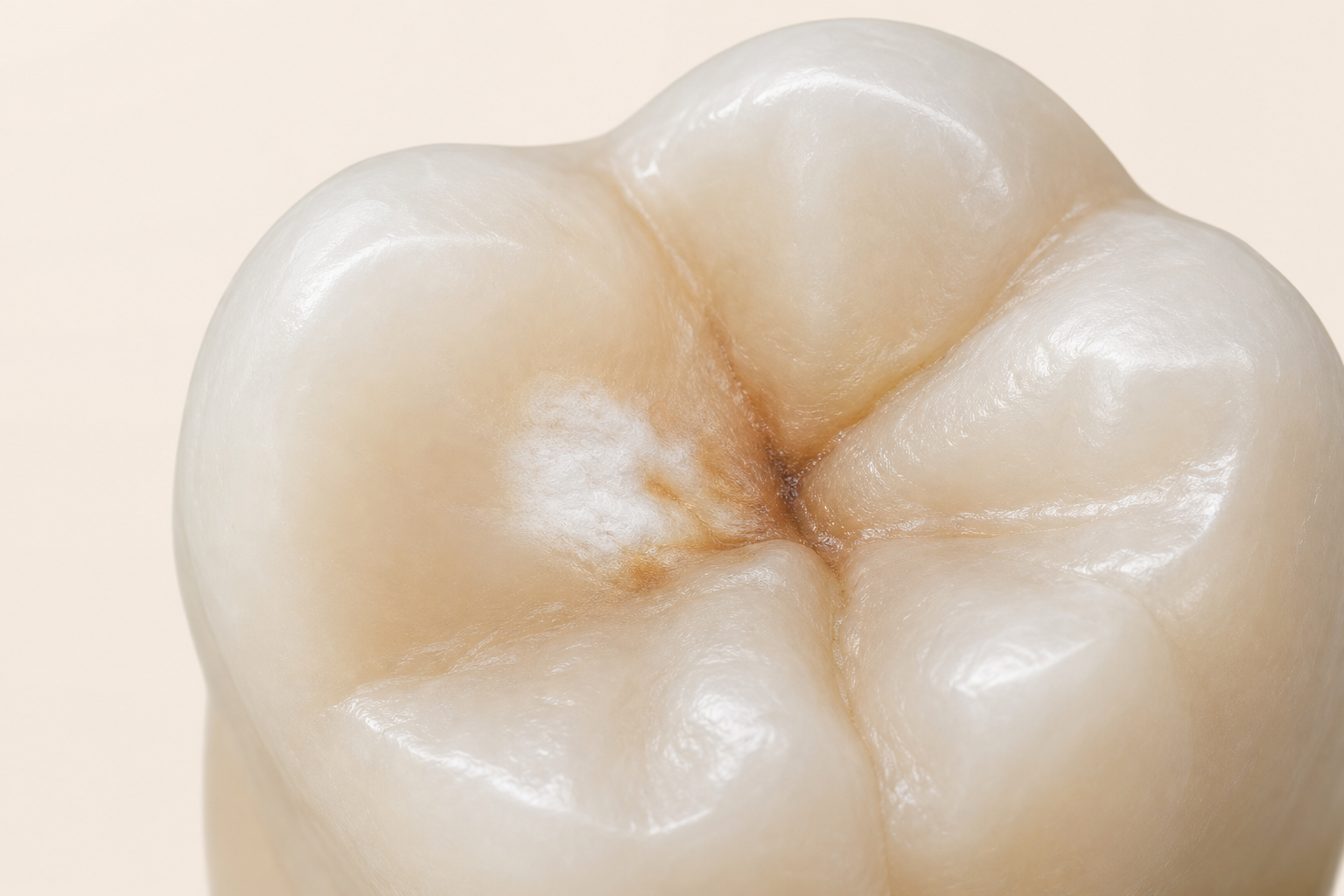
A tiny change in shine or texture can be the first visible clue.
Example: A child’s molar may look normal from the front, but a small chalky patch inside a chewing groove can be the first visible sign of decay.
If the question is what do dental caries look like, the short answer is that caries usually begin as a color change and then progress to softening, pitting, or a visible break in the enamel. Dental caries is the disease process, while the cavity is the damage you can see or feel.
What does a stage 1 cavity look like?
A stage 1 cavity usually looks like a white spot lesion or a faint opaque patch on enamel, not a deep hole. At this point, the tooth surface may still be intact, which is why the change can be easy to miss in a bathroom mirror. The area may also look slightly matte instead of glossy, especially after the tooth dries.
This is the stage where early tooth decay can still be slowed down, because the damage has not yet broken through the outer layer. That does not mean you should watch it for months. If the spot stays visible for more than a couple of days, or it seems to darken, expand, or feel rough, book an exam. For some families, a preventive visit and options like dental sealants can help protect teeth that are vulnerable to new decay.
On a child’s molar, stage 1 decay may hide in the grooves and look like a faint shadow. On a side surface between teeth, it may show up as a small white or brown patch where floss catches or food keeps packing in. That is why what does a cavity look like when it first starts is often less about a hole and more about a change in surface texture and color.
Quick ways to spot an early cavity
| Clue | What it may mean | What to do |
|---|---|---|
| Chalky white spot | Early enamel demineralization | Book a dental exam soon |
| Brown or yellow patch that does not wipe away | Possible decay or stain that needs checking | Compare it after brushing, then call if it stays |
| Rough spot or tiny pit | Surface breakdown may be starting | Do not wait for pain |
| Spot in a molar groove | Hidden decay can be easy to miss | Ask for an exam or X-ray if needed |
What do dental caries look like?
Dental caries usually move from a color change to structural damage. In the early stage, they may look like white or brown spots on enamel. As the decay reaches dentin, the affected area can look larger, softer, or slightly collapsed, and it may start to catch food more easily. Once the surface opens, the tooth may have a pit, a broken edge, or a small hole.
That progression is why the phrase what do dental caries look like matters clinically. Caries are not always obvious cavities at first. They can be subtle enough that a patient notices them only after a cleaning, an X-ray, or a dentist points out a change in shine or texture. If you are unsure whether a spot is stain or decay, a diagnostic exam like X rays and diagnostics can help sort it out.
The main difference is this: stain usually stays on the surface in a way that is more uniform, while caries tend to have a localized change that follows plaque-retaining areas such as grooves, margins, or tight spaces between teeth. Once the enamel starts softening, the risk of progression rises.
How do I tell if it's a cavity?
You can often tell a suspicious spot from a simple stain by checking whether it is fixed, changing, or paired with sensitivity. A cavity is more likely when the spot stays in the same place, does not brush off, and reacts to sweets, cold drinks, or biting pressure. It may also feel rough when your tongue passes over it.
| At-home clue | More likely a cavity | More likely something else |
|---|---|---|
| Spot stays in one place | Yes | No |
| Does not brush off | Yes | No |
| Sensitive to cold or sweets | Often | Less often |
| On the tooth surface | Yes | No, if it is soft tissue |
| Looks like a cluster of blisters | No | More like fever blisters |
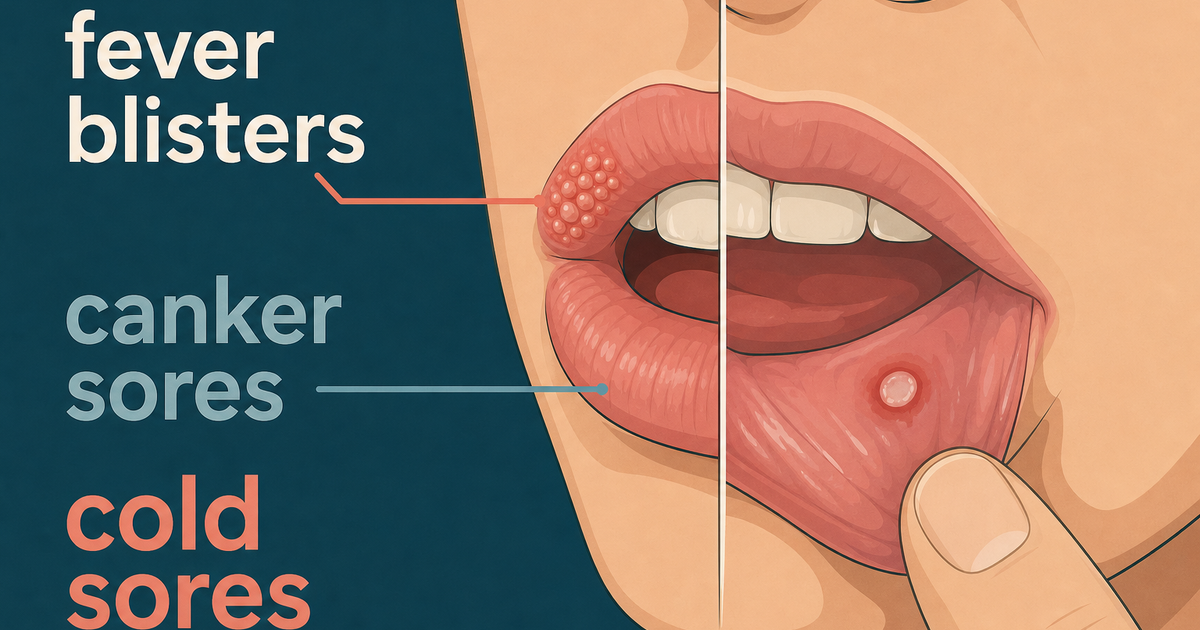
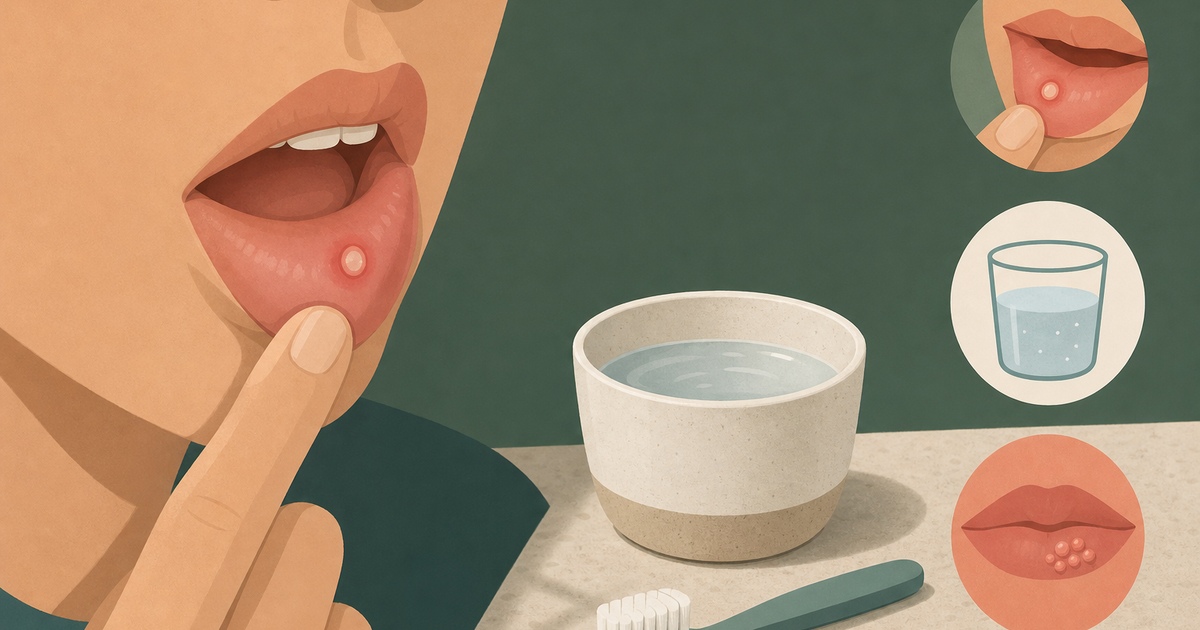
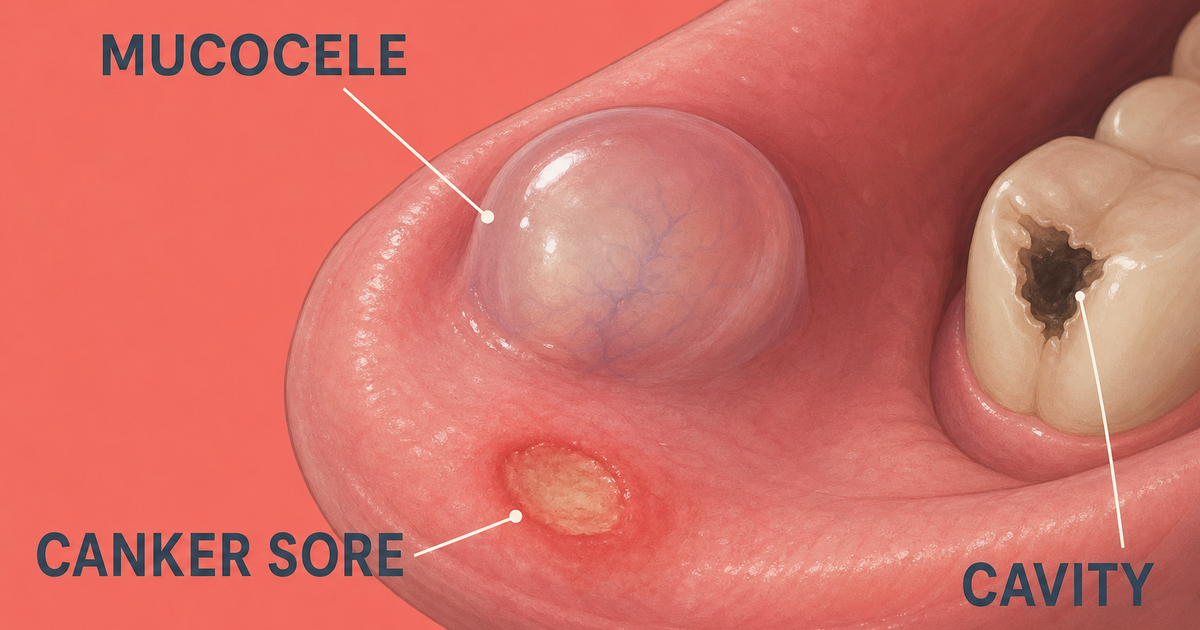
The look-alikes matter here. A canker sore is an ulcer inside the mouth, usually on soft tissue, not a change in the tooth surface. A pimple inside lip is usually a soft-tissue issue, such as irritation or a small mucus bump, rather than tooth decay. Fever blisters usually show up as clustered blisters on or near the lip, not as a spot on enamel.
Tip: If the spot is on the tooth, does not wipe away, and keeps changing over time, treat it as suspicious until a dentist says otherwise.
That is the simplest way how to get rid of the uncertainty: get the tooth checked before you try to fix it at home. Do not scrape, pick, or bleach the area yourself. If the tooth itself is the problem, you need the right diagnosis first, not a stronger toothbrush.
What does a cavity look like on a molar?
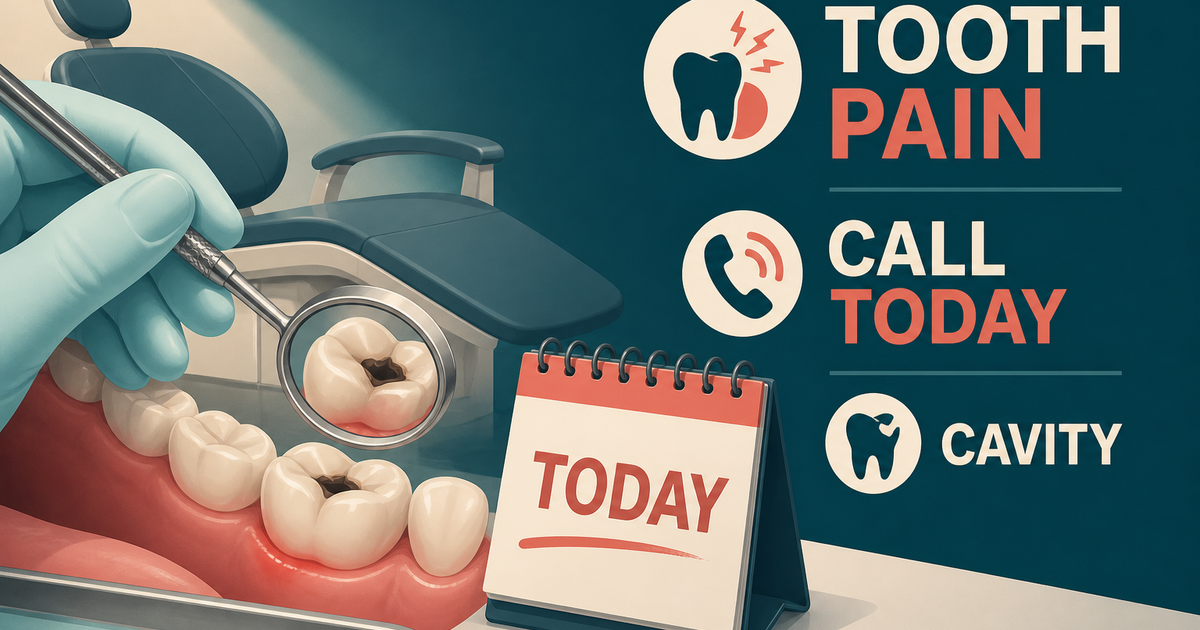
A cavity on a molar often hides in the chewing grooves, so it may look like a tiny dark line, a shallow pit, or a chalky patch that is easier to feel than see. Molars have deeper fissures than front teeth, which makes early decay harder to spot, especially in children and teens. Food and plaque can settle into those grooves and make a small area look like a stain until the decay grows.
This is where parents often ask what does a cavity look like on a molar, because the tooth may look fine from one angle and suspicious from another. A back tooth may also be partly blocked by the cheek or by the way the mouth opens in a mirror. If you notice a brown spot in a groove that stays after brushing, that is worth an exam rather than watchful waiting.
For families trying to prevent this pattern, sealants can be useful on teeth that are deep-grooved or cavity-prone. They are not a fix for a true cavity, but they can help keep a vulnerable molar from becoming the next problem.
Can you reverse a cavity?
You can sometimes stop very early enamel damage, but you cannot reverse a true cavity with a hole by brushing harder or using a home remedy. When decay is still at the white-spot stage, fluoride, better brushing, and fewer frequent sugar exposures can help the enamel remineralize and slow the process. Once the surface has broken down, the tooth usually needs professional treatment.
That is why can you reverse a cavity has a split answer. Early demineralization may be arrested. A completed cavity cannot heal itself. If the tooth has already lost structure, treatment often means restoring it with a filling. For that next step, see our page on tooth fillings.
A practical rule is to act before it hurts. The smaller the spot, the more options you usually have, and the less likely you are to need a larger repair later.
When to call the dentist about a suspicious spot
Call a dentist when a spot is new, getting darker, rough, or sensitive, or when food keeps catching in the same place. Those are common signs that a tiny change may be moving from early enamel damage into active tooth decay. If the area hurts with cold, sweets, or chewing, it should not be ignored.
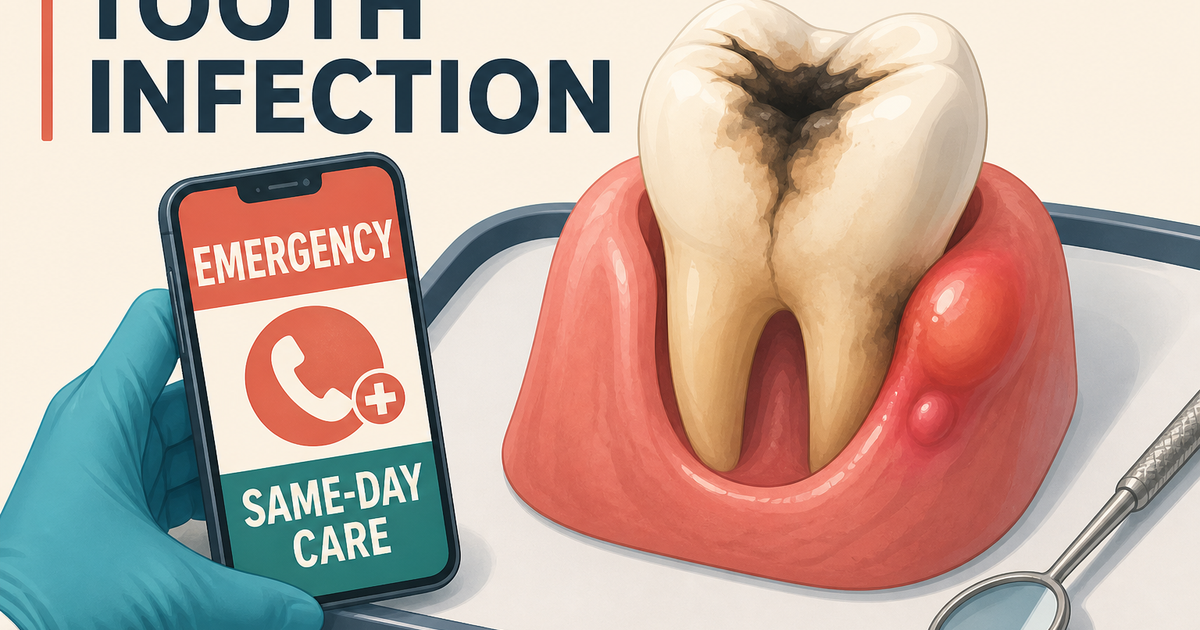
If you are wondering how long until a tooth infection kills you, the important point is that infection can become dangerous if a cavity progresses and swelling, fever, or spreading pain appear. That is not the stage to wait and see. Seek prompt care, and if symptoms are severe, use an urgent dental option such as emergency dentist care or read when to call the dentist for help deciding.
A tooth infection can spread beyond the tooth, which is why the warning signs matter more than the label on the spot. If you see swelling, fever, a draining bump, or severe pain, get help quickly. For more detail on that concern, the next step is our guide on how long until a tooth infection kills you.
For Georgetown patients, a quick exam can tell the difference between a harmless stain, an early cavity, and something that needs same-day attention. That kind of clarity saves time, worry, and often the tooth itself.
Will a cavity heal itself?
A cavity will not heal itself once the enamel surface has broken open. Very early enamel changes can sometimes stop progressing, but that is not the same as a tooth repairing a true hole. If the spot is already soft, pitted, or catching food, it needs a dentist.
That is why will a cavity heal itself is one of the most important questions in early detection. The answer is no for an actual cavity, and maybe only for a very early white spot under the right conditions. The sooner the spot is evaluated, the more likely the treatment is simple and conservative.
Frequently asked questions
What does a cavity feel like?
A cavity can feel like nothing at first, or it may cause cold sensitivity, sweet sensitivity, or pain when chewing. Early decay is often silent, which is why visual changes matter more than symptoms alone.
What drink cleans your teeth?
Water is the only drink that reliably helps rinse the mouth without adding sugar, acid, or stain. No beverage replaces brushing, flossing, and regular dental care.
How to get rid of a pimple inside lip?
A pimple inside lip is usually not a cavity, and it is often related to irritation, a mucocele, or another soft-tissue issue. If it is painful, growing, or not going away, a dentist or medical clinician should evaluate it.
How to get rid of canker sores?
You usually do not “get rid of” a canker sore overnight, but you can ease it with saltwater rinses, avoiding spicy or acidic foods, and using over-the-counter topical relief. If sores keep coming back or last more than two weeks, they should be checked.
What are fever blisters?
Fever blisters are fluid-filled lesions, usually linked to herpes simplex virus, and they most often show up on or around the lips rather than on the tooth surface. They are a different problem from cavities and need different care.