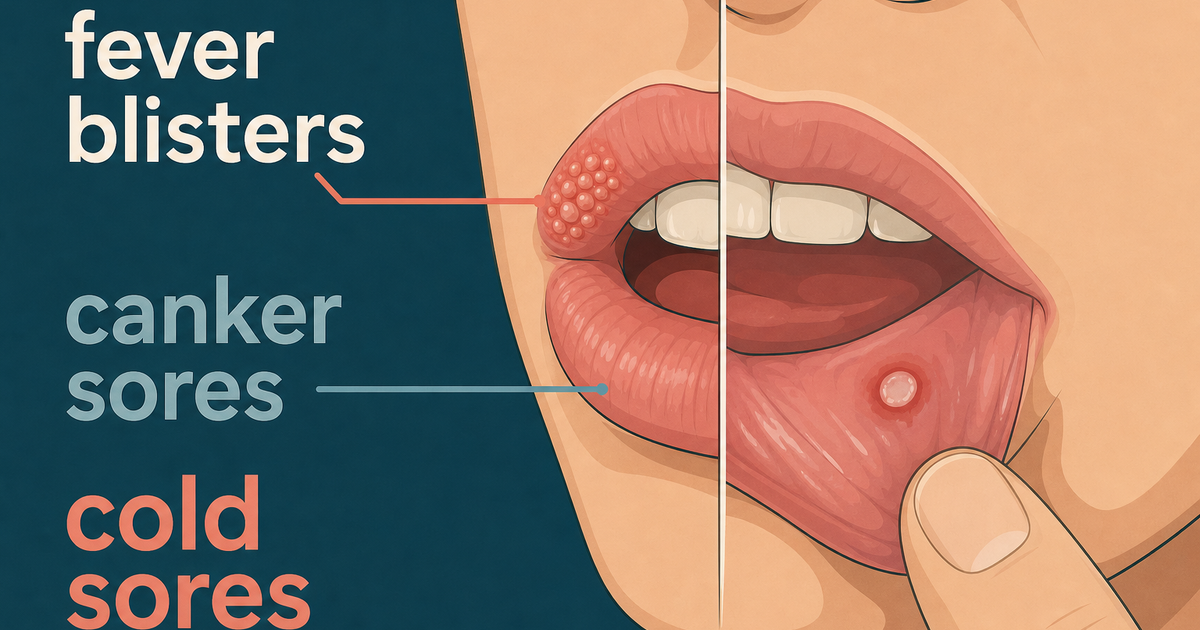
Fever blisters and canker sores often get mixed up, but they usually show up in different places and look different from the start. As of July 2026, the quickest clue is this: fever blisters usually begin on the lip edge or around the mouth and often blister first, while canker sores usually form inside the mouth and do not start as blisters.
Key takeaways
- Fever blisters usually show up outside the mouth, while canker sores usually show up inside it.
- Fever blisters often start with tingling or burning before the blister appears.
- Canker sores are aphthous ulcers, and they are not the same as cold sores.
- A sore that looks like a pimple inside lip tissue is more likely to be irritation or a canker sore than a fever blister.
- Tooth decay is a different problem altogether, so what do a cavity look like and what do dental caries look like are tooth-surface questions, not sore questions.
Which one is it: fever blister or canker sore?
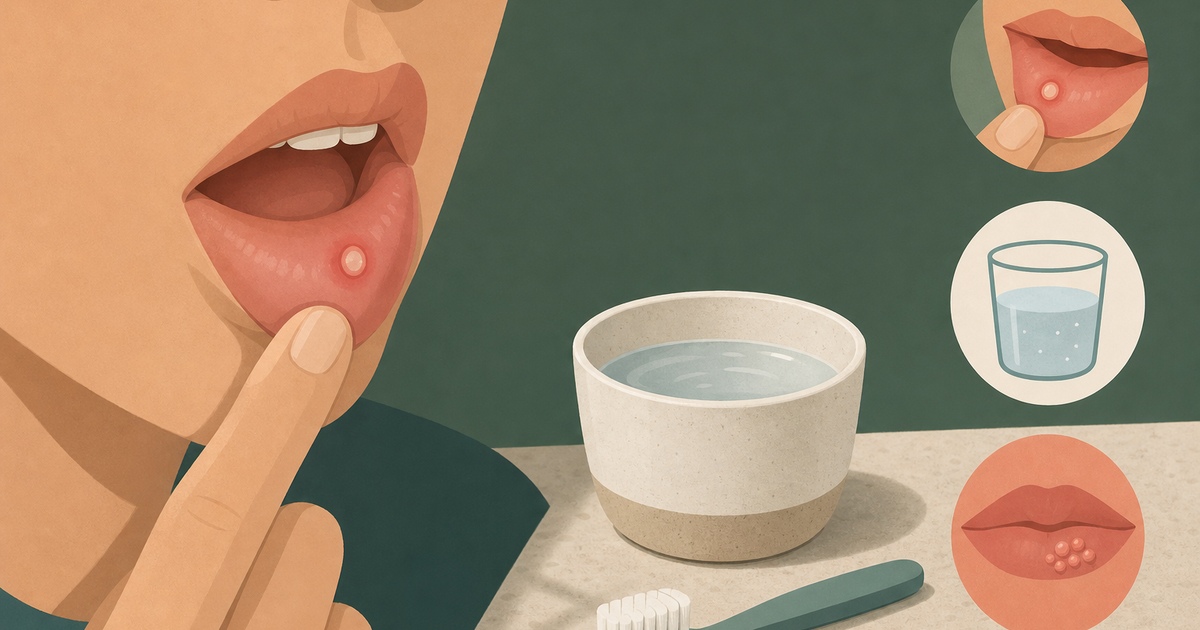
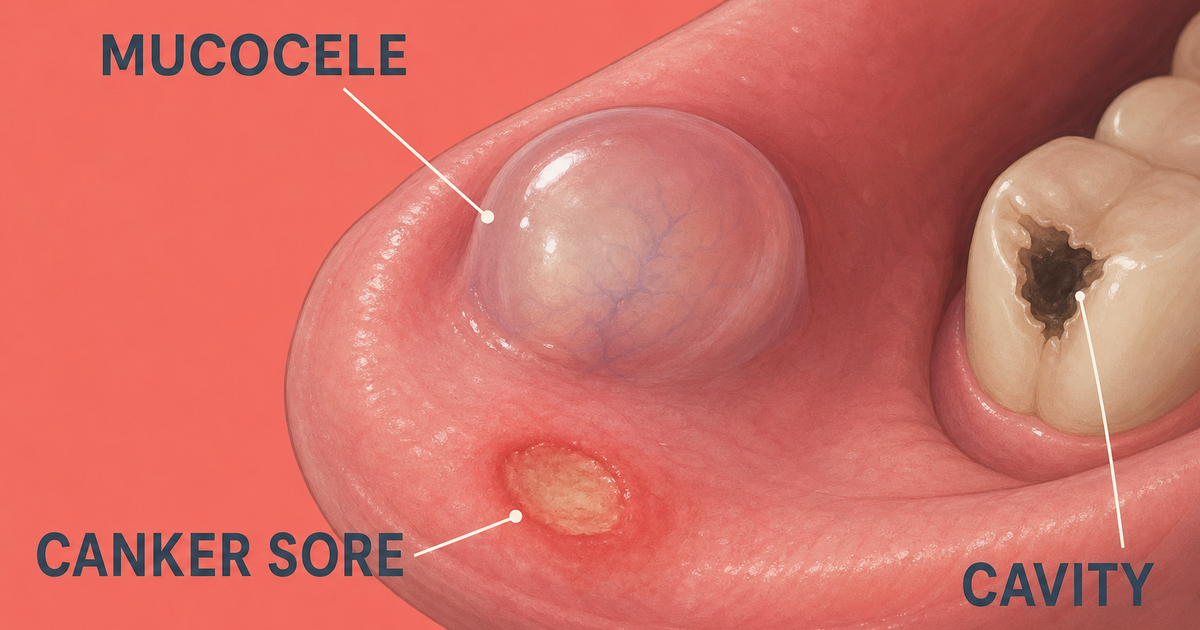
Fever blisters usually show up on the outside of the lips or around the mouth, while canker sores usually stay inside the mouth. That single difference solves a lot of the confusion, because a sore on the inner lip, cheek, tongue, or floor of the mouth is more likely to be a canker sore or irritation than a fever blister.
Fever blisters, also called cold sores, often start with tingling, burning, or itching before a small blister appears. Canker sores usually open as round or oval ulcers with a pale centre and red edge, and they tend to hurt when they rub against food or teeth. If you are trying to sort out a lip sore quickly, our pimple inside lip guide gives a closer look at the most common look-alikes.
A sore that keeps changing, spreads, or does not fit the usual pattern deserves a dental or medical exam. That is especially true if the area is very swollen, very painful, or hard to eat around.
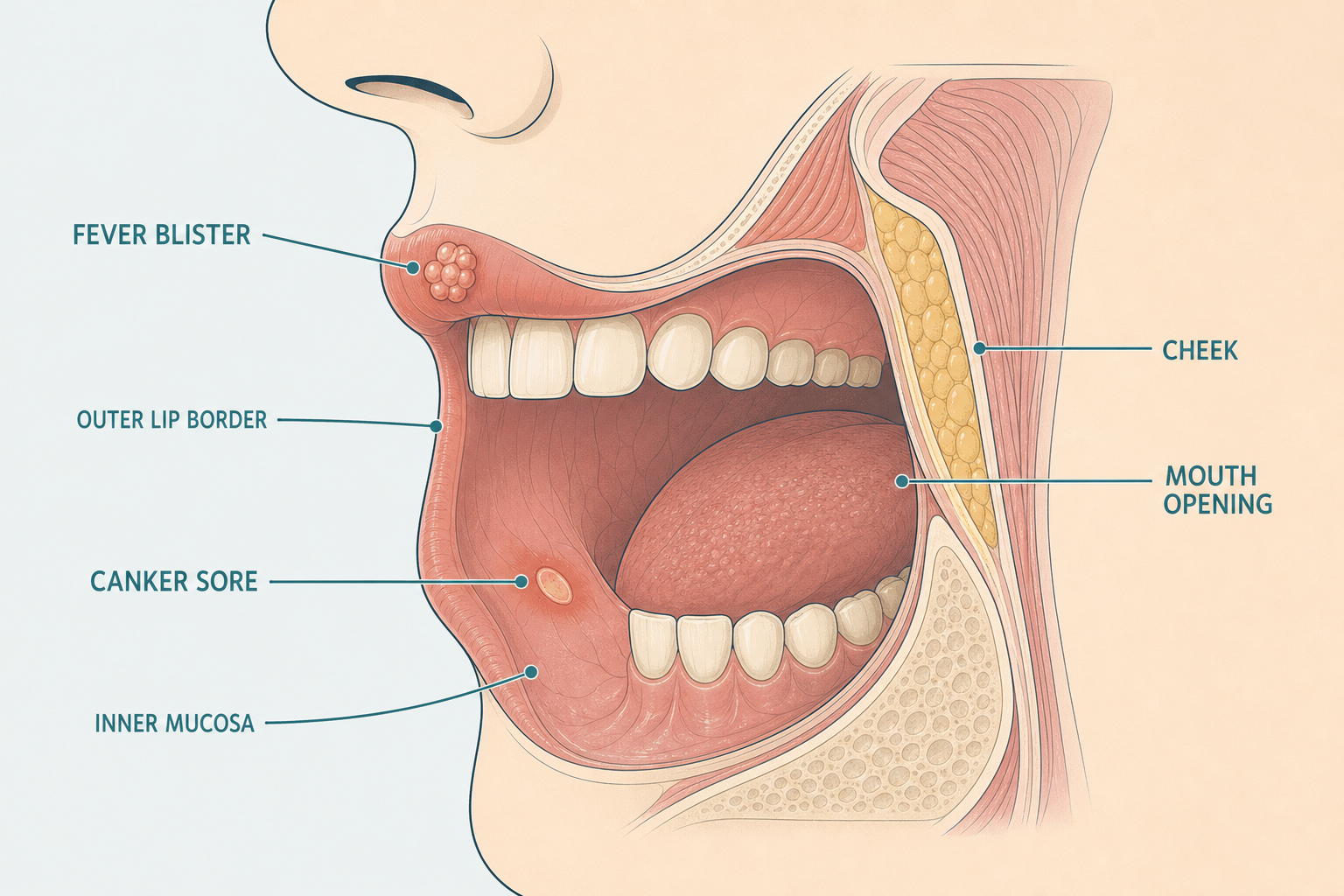
This diagram shows the key placement difference that helps separate the two.
What fever blisters look and feel like
Fever blisters usually start as a cluster of small, fluid-filled blisters near the lips, then crust over as they heal. The early warning signs are often tingling, burning, or tenderness before the sore is visible.
These sores are commonly linked to herpes simplex virus type 1, which can stay in the body and flare again later. The National Institute of Dental and Craniofacial Research and the Mayo Clinic both describe cold sores as recurrent, blistering lesions that often affect the lip border or nearby skin.
In everyday language, fever blisters and cold sores mean the same thing. The important part is not the label, but the pattern: outside the mouth, blister first, then crust.
Example: A patient who feels a tingling spot on the lip on Monday, sees a tiny blister on Tuesday, and notices a crusted sore by Friday is describing a classic fever blister pattern.
What can be mistaken for a fever blister?
Several other mouth problems can look like a fever blister at first, especially if the sore is small or irritated. Common look-alikes include a canker sore, a pimple inside lip tissue, a minor trauma sore from biting, angular cheilitis at the mouth corners, or a small inflamed spot from rubbing.
Location matters more than the word “pimple.” A sore inside the lip is usually not a fever blister, because fever blisters tend to start on the outer lip or skin around the mouth. If you want a more detailed breakdown of lip sore look-alikes, the Shape Dental guide on pimple inside lip is a useful next step.
If a sore keeps recurring in the same spot, changes shape, or fails to heal on schedule, it should be checked. That kind of pattern is less about guessing and more about ruling out infection, irritation, or another mouth condition.
How can you tell a canker sore from a fever blister?
Canker sores usually stay inside the mouth and appear as painful ulcers, while fever blisters usually start outside the mouth as clusters of blisters.
| Clue | Canker sore | Fever blister |
|---|---|---|
| Usual location | Inside lips, cheeks, tongue, or floor of mouth | Lip edge, around the mouth, sometimes face skin nearby |
| First look | Round or oval ulcer | Tiny fluid-filled blister or cluster |
| Early feeling | Soreness, stinging, pain when eating | Tingling, burning, itching, then blistering |
| Contagious? | No | Yes, especially during an active outbreak |
| Common trigger pattern | Irritation, stress, minor injury, foods | HSV-1 reactivation, often with stress, illness, or sun exposure |
| Typical healing | Often 1 to 2 weeks | Often 7 to 10 days, sometimes longer |
A quick self-check helps most: if it is inside the mouth and opens as an ulcer, it points toward a canker sore; if it is on the lip border and blisters first, it points toward a fever blister.
Canker sores are also called aphthous ulcers, and they are not caused by the same virus as fever blisters. The Mayo Clinic and the Cleveland Clinic both describe canker sores as noncontagious mouth ulcers that tend to form on soft tissue inside the mouth.
If you are comparing a sore on the inside of the lip to a sore on the outside of the lip, the location alone often points you in the right direction. Add the blister stage, and the picture becomes much clearer.
What causes fever blisters and canker sores?
Fever blisters are caused by herpes simplex virus type 1, which can sit quietly in the body and reactivate later. Canker sores are aphthous ulcers, and their exact cause is not fully known, but irritation, stress, and certain foods can play a role.
Trusted sources describe them differently for a reason. The American Dental Association treats canker sores as a separate condition from cold sores, and the National Institute of Dental and Craniofacial Research separates fever blisters from canker sores because the causes, appearance, and contagiousness are not the same.
That distinction matters when you are deciding what to do next. A fever blister may call for outbreak management, while a canker sore usually needs comfort care and time.
How to get rid of canker sores
The goal with canker sores is usually to calm the pain, protect the sore, and let it heal. The fastest relief often comes from avoiding spicy, acidic, or rough foods, since those can keep rubbing the ulcer and make it sting more.
A salt water rinse can help soothe the area and keep it clean. If you want a practical step-by-step option, our canker sore home care guide walks through simple ways to make the sore less miserable while it heals.
Here is a quick home-care checklist:
- Rinse gently with warm salt water a few times a day.
- Avoid spicy, acidic, and crunchy foods until the sore calms down.
- Use a protective oral gel or pain reliever if a clinician or label says it is safe for you.
- Switch to a soft toothbrush so the area does not get rubbed more.
- Call for an exam if the sore keeps returning or takes longer than expected to heal.
Over-the-counter protective gels, oral pain relievers, and other mouth-rinse options can help some people, but recurring or slow-healing sores need a professional look. If a sore keeps coming back, it is worth checking whether the cause is repeated irritation, a bite injury, or something else that needs treatment.
How to get rid of fever blister fast?
The fastest way to shorten a fever blister is to start treatment early, ideally when the tingling starts. Once the blister is fully formed, home care can still help with comfort, but it usually will not make the sore disappear right away.
Early antiviral treatment may shorten an outbreak, and careful symptom relief can keep the area from getting more irritated. The Mayo Clinic says prescription antivirals work best when started early in a cold sore episode.
No home remedy erases a fever blister instantly. The useful goal is to reduce pain, protect the skin, and shorten the outbreak as much as possible.
What does a stage 1 cavity look like?
A stage 1 cavity usually shows up on the tooth surface, not on the lip or soft tissue, so it looks very different from a fever blister or canker sore. Early decay may appear as a chalky white spot, slight discoloration, or a rough area on enamel.
That is why what do a cavity look like and what do dental caries look like are tooth questions, not sore questions. If you want a closer look at early decay signs, see our what dental caries look like guide or the related cavity self-check explainer.
A sore on the lip and a spot on a tooth are different problems, even if they both hurt. If the issue is on the tooth, the right next step is a dental exam, not mouth-sore home care.
How do I tell if it's a cavity?
A cavity usually causes tooth sensitivity, visible discoloration, or a soft spot or hole in the tooth, not a blister or ulcer. If pain shows up when you eat sweets, drink something cold, or bite down, the problem may be tooth decay rather than a soft-tissue sore.
That is the clearest answer to what do a cavity look like in real life: it is a tooth-surface problem, not a lip-sore problem. If you are still unsure, a dentist can check whether the pain comes from enamel damage, decay, or something else entirely.
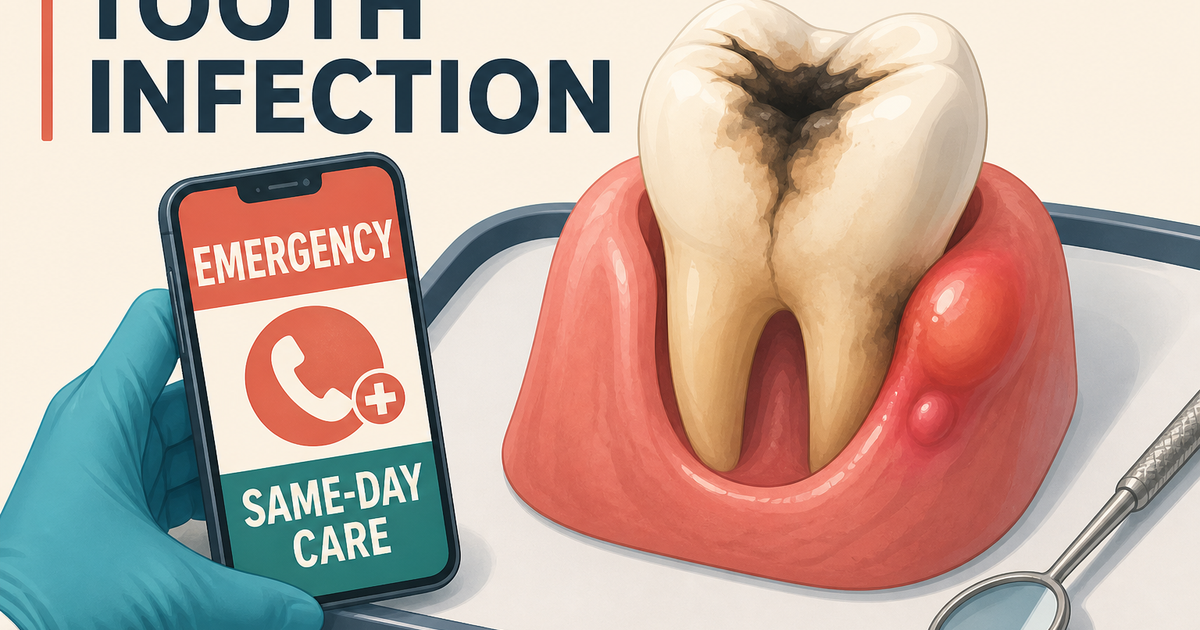
If there is swelling, severe pain, or concern about infection, do not keep guessing. The right move is prompt dental care, because tooth infections and spreading swelling need attention sooner rather than later. If you need urgent help, our emergency dentist Georgetown TX page explains how same-day care can help.
When should you call a dentist or doctor?
You should call a dentist or doctor if a sore lasts more than two weeks, keeps coming back, gets much worse, or makes eating and drinking difficult. That is the point where self-checking stops being useful.
Get urgent help for fever, spreading redness, facial swelling, trouble swallowing, or severe pain. Those signs can point to infection or another condition that should be examined right away. If you are deciding when to seek care, our guide to dental emergencies gives a practical checklist.
Questions like how long until a tooth infection kills you are a sign to stop waiting and get seen immediately. A severe tooth or gum infection can become serious, and the safest move is prompt evaluation rather than trying to ride it out.
Shape Dental can help sort out whether you are dealing with a sore, a cavity, or something that needs faster care. If the pain is severe or the swelling is growing, call for an exam instead of guessing at home.
Frequently asked questions
What are the main causes of fever blisters?
Fever blisters are caused by herpes simplex virus type 1, and outbreaks often flare when the body is under stress, fighting illness, getting too much sun, or recovering from irritation to the lips.
Are cold sores a STD or STI?
Cold sores are usually caused by herpes simplex virus type 1, and they are not the same thing as a sexually transmitted infection diagnosis in the way people usually mean it, although the virus can spread through close contact during an active outbreak.
Will a cavity heal itself?
No, a cavity will not heal itself once decay has started, because lost enamel does not grow back on its own and the tooth usually needs professional treatment.