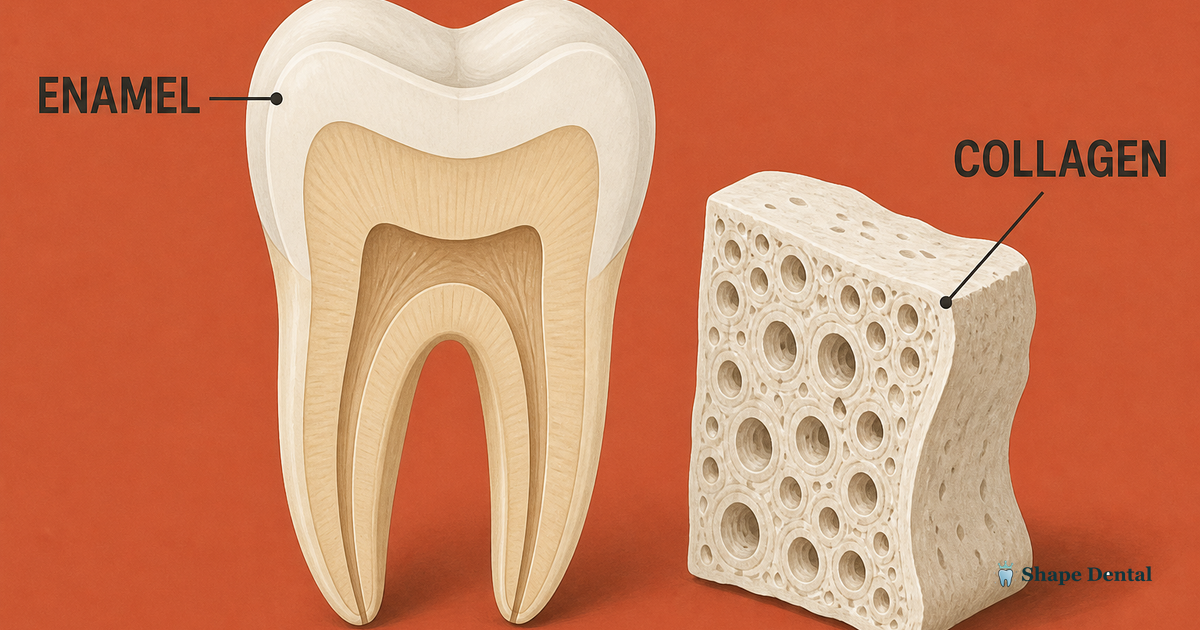
As of September 2026, teeth are not bones: they are mineralized organs with enamel on the outside and a living core inside, while bones are skeletal tissue built to support the body and repair themselves. Shape Dental can explain the difference in plain language and show what it means for everyday care.
Key takeaways
- Teeth are not bones, even though both contain calcium-rich minerals.
- Tooth enamel is the hardest substance the human body makes, but it has no living cells and cannot rebuild itself like bone can.
- Bones belong to the skeletal system; teeth are specialized organs for biting, chewing, and speaking.
- Small enamel problems can become rotting teeth, so early dental care matters.
Are teeth bones?
No, teeth are not bones. They are mineralized dental organs with a living core, while bones are living skeletal tissue built for support, protection, and constant remodeling.
That distinction explains the confusing search terms people use, including are teeth bones or organs and are teeth organs. A tooth contains multiple specialized tissues working together, not a bone-like matrix with marrow and the same repair system. More than 99 percent of the body’s calcium is stored in bones and teeth, which is one reason they get lumped together, but shared minerals do not make them the same tissue type (Healthline).
Bones are part of the skeletal system. Teeth are different.
What are teeth and bones made of?
Teeth and bones both rely on calcium phosphate, mainly in the form of hydroxyapatite, but they organize that mineral very differently.
A tooth has four main parts: tooth enamel, dentin, dental pulp, and cementum. Enamel forms the outer shell, dentin makes up the bulk under it, pulp carries nerves and blood vessels, and cementum covers the root. Bone, by contrast, is a living tissue built with a collagen framework, blood supply, and cells that continually remodel it.
Acıbadem International notes that tooth enamel is about 96% mineral and has no living cells, which is why it is so hard and so unforgiving when it breaks (Acıbadem International). Bone contains much more living tissue and collagen, so it can flex, heal, and reshape itself over time. In practical terms, what are teeth made of is a question about layered anatomy, while what are teeth and bones made of is really a comparison between two very different mineralized systems.
Which is harder, a tooth or a bone?
A tooth is harder than a bone, but hardness is not the same as strength.
“On the Mohs hardness scale, which measures resistance to scratching, enamel earns a hardness of 5.”
Cleveland Clinic
The Cleveland Clinic reports that enamel earns a hardness rating of 5 on the Mohs scale, making it harder than bone and harder than silver or gold (Cleveland Clinic). That helps explain why enamel stands up to years of chewing. It also explains why enamel chips: the harder a material is, the less forgiving it can be under a sudden sideways hit.
Bones are built to absorb stress and recover. Enamel is built to resist wear. One is a shock absorber. The other is a cutting surface.
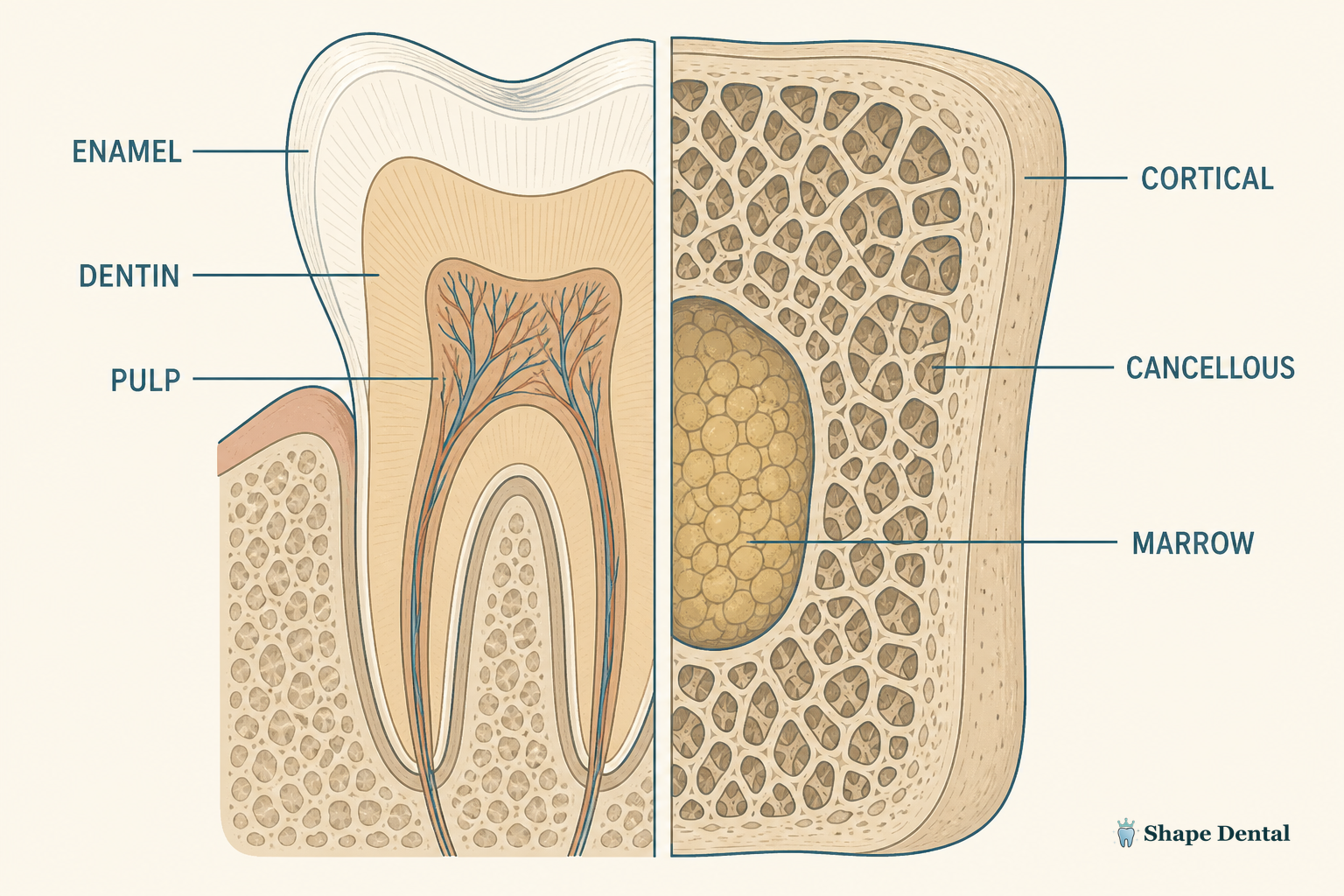
Tooth and bone layers at a glance.
Teeth vs. bones: Key biological differences at a glance
A quick comparison shows why teeth are not bones and why their jobs are so different.
| Feature | Teeth | Bones |
|---|---|---|
| Main role | Biting, chewing, speech | Support, movement, protection |
| Tissue type | Specialized dental organs | Skeletal tissue |
| Outer layer | Enamel | Periosteum and compact bone |
| Living cells in hard outer layer | No | Yes |
| Repair after damage | Very limited | Active remodeling and healing |
| Blood vessels inside hard shell | No | Yes |
Bones form your skeleton to give your body shape, support your weight, and protect vital organs (Cleveland Clinic). Teeth are not load-bearing parts of that framework. They sit in the jaw, anchored by the periodontal ligament and cementum, but they do not fuse into the skeleton the way true bone tissue does.
That is why what are teeth classified as is not “bone.” They are individual organs with a very specialized job.
Why teeth cannot heal like broken bones
Teeth do not heal the way bones do because enamel has no living cells to rebuild it.
When bone breaks, the body can send cells to form new tissue across the fracture. When enamel cracks, wears down, or starts to decay, it cannot grow back on its own. That is why a small dark mark can matter so much. A black spot on tooth surface can be an early sign of enamel breakdown or decay, and once the surface is compromised, bacteria can move deeper into dentin.
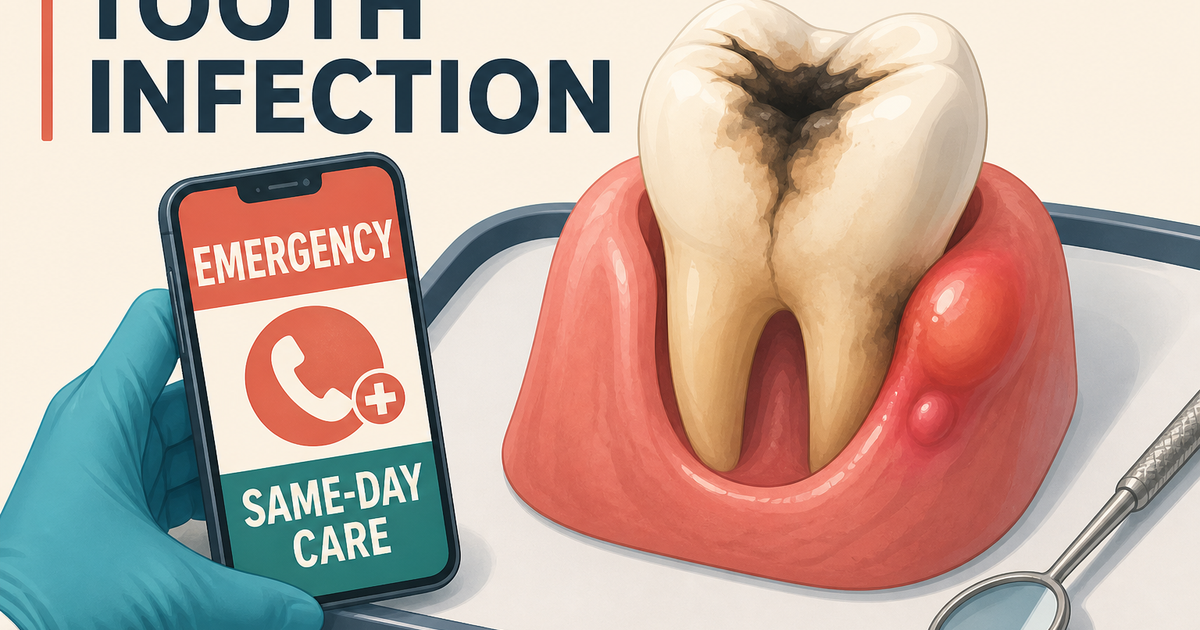
If that damage progresses, rotting teeth can develop, followed by sensitivity, pain, pulp inflammation, and sometimes infection. We see this in patients who waited too long because the tooth “didn’t hurt yet.” It often does hurt later. For a closer look at what early decay can look like, see what dental caries look like. If infection becomes the concern, our guide on tooth infection warning signs explains when it needs urgent care.
A DDS is a Doctor of Dental Surgery. In everyday terms, it means a dentist trained to diagnose, treat, and protect teeth before small damage turns into a bigger restorative problem.
How to protect and remineralize non-living enamel
You cannot regrow enamel, but you can protect it and help weakened areas harden again before they become cavities.
- Brush twice a day with fluoride toothpaste.
- Floss once a day to remove plaque between teeth.
- Limit frequent sipping of sugary or acidic drinks.
- Choose water between meals.
- Ask about sealants for cavity-prone back teeth.
- Keep routine cleanings and exams on schedule.
- Follow fluoride recommendations from your dentist.
Acıbadem International notes that enamel begins dissolving when mouth pH drops below roughly 5.5, and that each sugary or acidic exposure can trigger an acid episode lasting about 20 to 30 minutes (Acıbadem International). That is why grazing on soda, juice, or candy all afternoon is harder on teeth than having a single treat with a meal.
Fluoride helps rebuild acid-softened enamel into a more acid-resistant crystal, and the CDC credits fluoridated water with cutting cavities by about 25% (Source: Acıbadem International, 2026). If you want the clinical side of that protection, our fluoride treatment page explains how it supports enamel. For ongoing protection, exams and cleanings help catch early wear before it becomes a cavity.
At Shape Dental, that means watching for early enamel wear, giving honest treatment options, and helping Georgetown families protect teeth before a small spot becomes a bigger repair.
Are teeth bones or organs?
Teeth are best understood as organs, not bones.
An organ is a structure made of different tissues working together for a function. A tooth has enamel, dentin, pulp, cementum, nerves, and blood vessels in the root area, all serving the same job. That makes are teeth bones or organs an easy question once the anatomy is clear: teeth are organs with mineralized surfaces, while bones are part of the skeletal system.
That distinction matters in daily care, too. Tooth damage is not just “wear and tear.” It can affect chewing, sensitivity, and long-term oral health, especially in children, adults with grinding, and seniors with dry mouth or restorative needs.
Frequently asked questions
Do teeth count as 206 bones?
No, the adult human skeleton has 206 bones, and teeth are not included in that count.
Are teeth in the bone family?
No, teeth share minerals with bone, but they develop from different tissues and function as separate dental organs.
Which is harder, a tooth or a bone?
A tooth is harder because enamel outperforms bone on the Mohs hardness scale, but bone is better at absorbing impact and healing.