
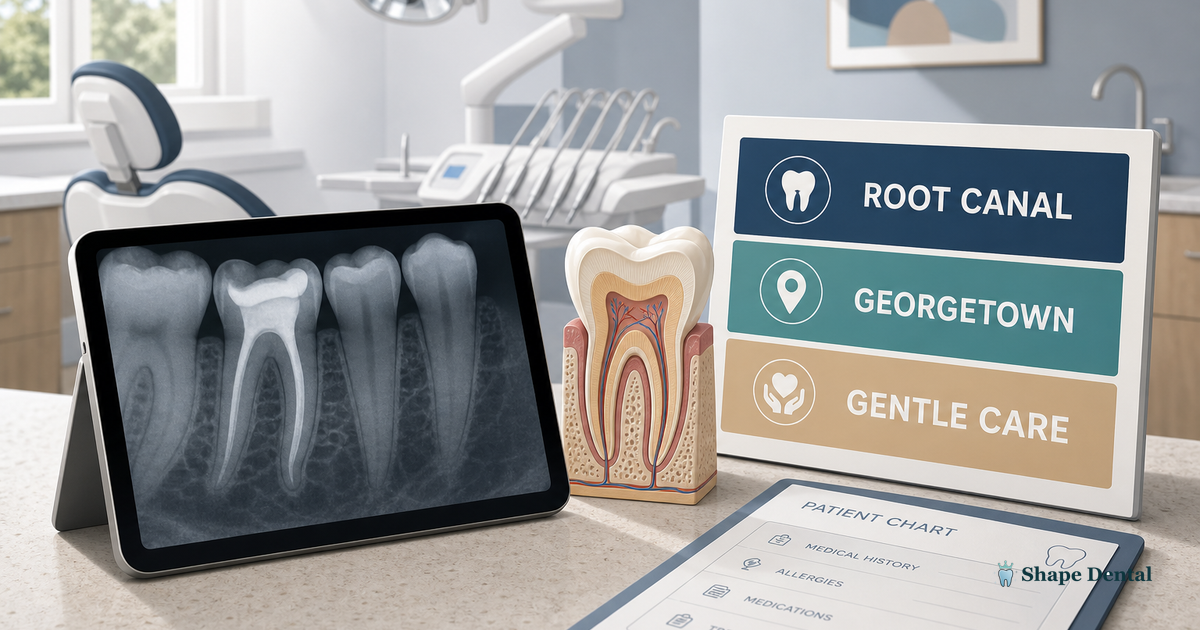
Root canal therapy helps save a damaged tooth by removing infected or inflamed tissue from inside it, then sealing it so the infection does not keep spreading. As of June 2026, Georgetown patients dealing with lingering tooth pain, swelling, or a tooth abscess can usually get a clear answer quickly from an exam and X-rays, and Shape Dental offers that kind of local, patient-first help with gentle care and honest recommendations.
Key takeaways
- Root canal therapy removes the infected dental pulp, cleans the canals, and seals the tooth to preserve the natural tooth when possible.
- Most patients need it because deep decay, cracks, trauma, or repeated dental work let bacteria reach the pulp.
- Mild soreness and chewing tenderness are common root canal treatment side effects, and recovery is often only a few days.
- Soft foods, careful chewing, and prompt follow-up matter more than trying to push through pain.
- If pain, swelling, or sensitivity keeps getting worse, the tooth needs an in-person evaluation rather than waiting.
What is root canal therapy?
If a toothache keeps returning after a filling, root canal therapy is the treatment that removes the sick tissue inside the tooth, clears the canals, and gives the tooth a chance to stay in place. The tissue inside the tooth is called the dental pulp, and when it becomes badly irritated or infected, the tooth can hurt for days, not just minutes. Local anesthesia keeps the appointment comfortable, and the goal is to relieve pain while preserving the natural tooth whenever possible.
This is the treatment people often need when a deep cavity reaches the pulp or when a tooth abscess develops at the root. In straightforward cases, a general dentist can complete the procedure. In more complex anatomy or retreatment cases, an endodontist, the root canal specialist, may handle the tooth.
The American Association of Endodontists explains that root canal treatment is meant to remove diseased pulp and save the tooth instead of extracting it[^1]. That matters for chewing, bite stability, and long-term dental health, especially when the tooth is otherwise restorable.
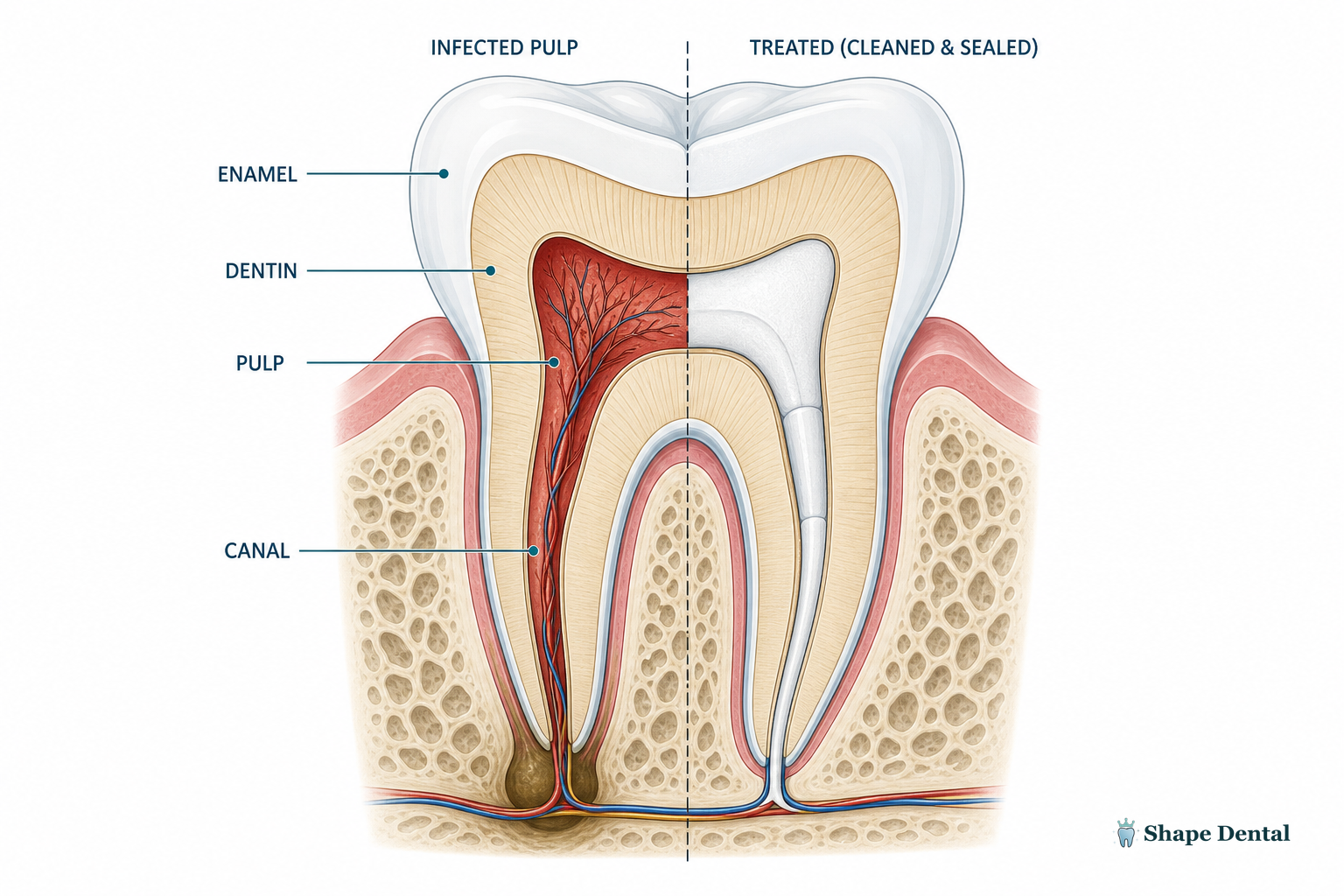
This diagram shows what root canal therapy removes and protects.
Why do people need root canal therapy?
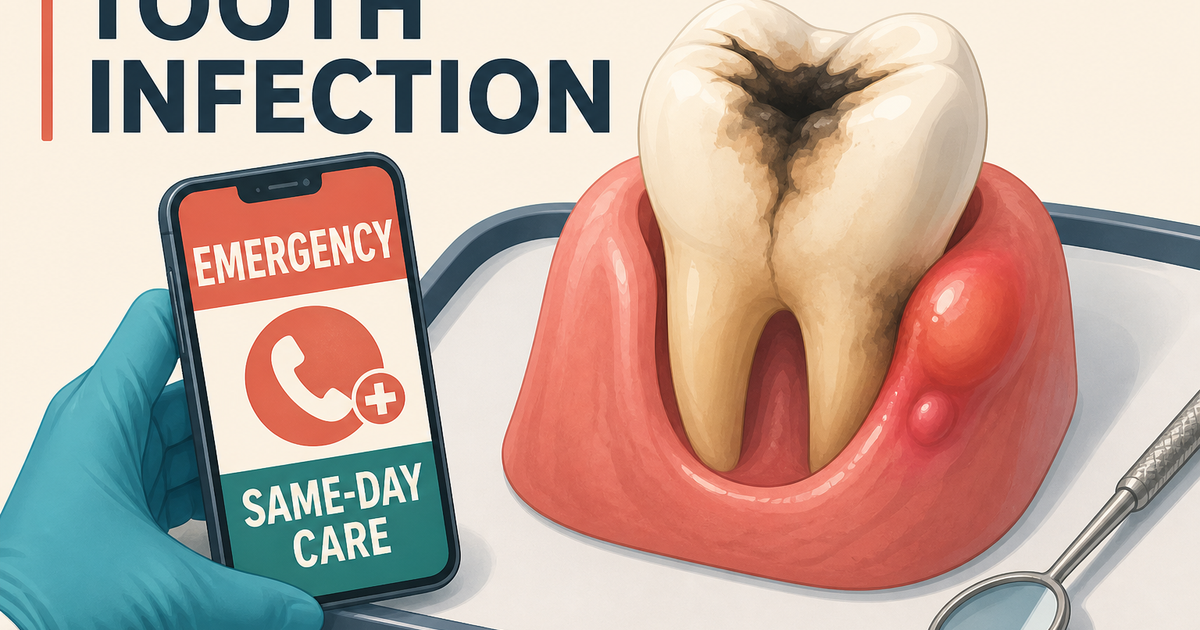
People need root canal therapy when bacteria reach the pulp and the tooth can no longer calm down on its own. Deep decay is the most common reason, but a crack, a sports injury, or repeated dental work can also open the door. Once the pulp is inflamed or infected, the pain may come and go, but the underlying problem usually stays until the tooth is treated.
Common warning signs include lingering sensitivity to hot or cold, pain when chewing, swelling near the gumline, and a small bump that drains near the tooth. Some patients feel a dull ache that wakes them up at night. Others notice the tooth feels taller or tender when biting, which is often the body’s way of signalling inflammation around the root.
Untreated root canal side effects are not just more pain. The infection can spread further, turn into a larger abscess, and eventually weaken the tooth so much that extraction becomes the safer option. If gum health is part of the picture, deeper treatment may also be needed alongside the tooth work, which is why related care such as deep cleaning or periodontal therapy can matter when infection is tied to the supporting tissues.
The Mayo Clinic notes that root canal treatment is commonly used to treat infected or damaged pulp and prevent ongoing infection[^2]. That is the practical reason dentists push for evaluation early: treating the tooth before swelling becomes severe usually gives the patient more options.
What happens during the procedure?
The appointment begins by numbing the tooth, and Shape Dental keeps each step focused on comfort while the dentist removes the infected pulp, cleans the canals, and seals the tooth.
- The dentist numbs the tooth and surrounding area with local anesthesia so the patient can stay relaxed.
- A small opening is made in the tooth so the damaged pulp can be removed.
- The canals are cleaned, shaped, and flushed to reduce bacteria.
- The space is filled with a biocompatible material and sealed.
- A temporary or permanent restoration is placed, and a crown may be recommended later to protect the tooth.
Patients usually want to know whether the appointment hurts. The honest answer is that modern root canal therapy is designed to treat pain, not create it, and numbness should keep the procedure manageable. You may feel pressure or vibration, but you should not feel sharp pain. If you do, the dental team can adjust anesthesia before moving forward.
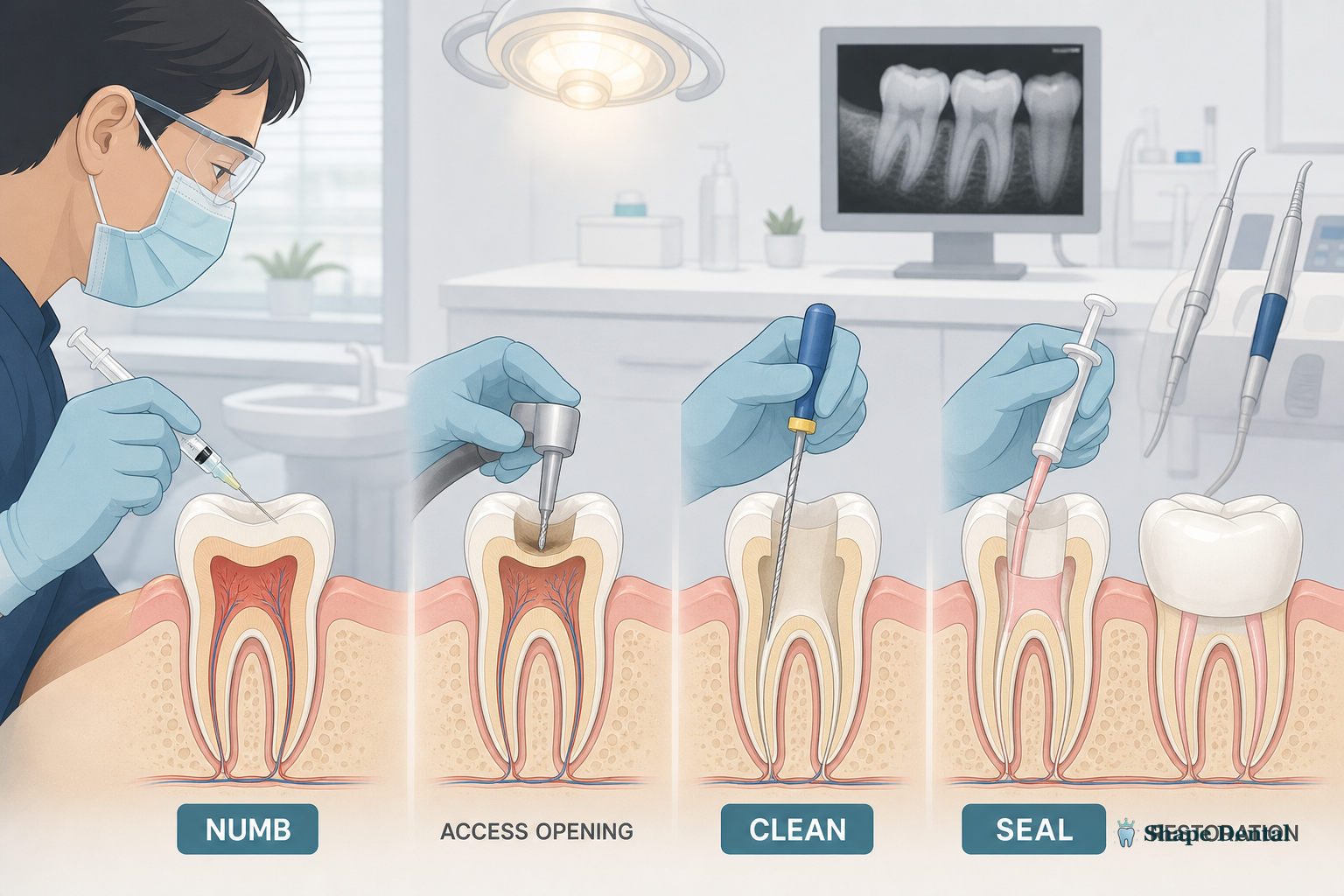
The appointment follows a simple, step-by-step sequence.
In many cases, the final restoration matters as much as the canal treatment itself. A back tooth often needs a crown because chewing forces are high, and a tooth that has already been weakened by decay or a large filling may not hold up well without protection. The procedure ends when the tooth is sealed and set up for that long-term support.
| Question patients ask | Short answer |
|---|---|
| Will I be awake? | Yes, but local anesthesia keeps the tooth numb during treatment. |
| Will it hurt afterward? | Mild soreness is common for a few days, especially when biting. |
| Do I always need a crown? | Not always, but many back teeth need one for strength. |
| Can I eat right away? | Wait until numbness wears off, then start with soft foods. |
What side effects and recovery time should patients expect?
Most patients notice mild soreness, tenderness when biting, or temporary sensitivity after root canal therapy, and those symptoms usually improve over a few days. Root canal treatment side effects are often similar to what you might feel after a deep filling: the area is a little irritated, chewing feels odd for a short time, and the tooth may be tender if you press on it.
Root canal recovery time is often a few days of manageable discomfort, though some teeth take longer to settle fully, especially if the infection was severe before treatment. Pain should trend downward, not upward. The tooth may also feel a little different until the final crown or permanent filling is placed.
A good rule for the first day or two is to keep food soft and avoid chewing directly on the treated side. Good options include scrambled eggs, yogurt, oatmeal, soup that is not too hot, mashed potatoes, and smoothies without crunchy add-ins. If you are wondering what to eat after root canal therapy, choose foods that do not require much biting while the tooth and gum area calm down.
Tip: If the tooth is still numb, wait to eat until sensation returns enough that you will not accidentally bite your cheek or tongue.
Call the dentist if swelling increases, pain gets worse instead of better, or the tooth remains very sensitive after several days. That is the point where the recovery pattern no longer sounds routine.
The Cleveland Clinic also notes that mild pain and sensitivity after a root canal are expected for some patients, with recovery depending on the tooth and the amount of inflammation present[^3].
How many types of root canal treatment are there?
Types of root canal treatment vary by which tooth is involved, how many canals it has, and how complex the infection is. Front teeth, or anterior teeth, often have fewer canals and can be simpler to treat than molars, which may have multiple canals and more curved anatomy.
In practical terms, most patients only need one of a few paths:
- A standard root canal on a tooth that can be cleaned and sealed in one treatment plan.
- A more complex case handled by an endodontist when the canals are narrow, curved, or hard to access.
- Retreatment when a previous root canal did not fully solve the infection or a new problem developed later.
- Additional restoration, such as a crown, when the tooth needs strength after the infection is cleared.
Which approach is best depends on the tooth itself, not on a one-size-fits-all rule. That is why dentists usually rely on X-rays, symptoms, and the tooth’s remaining structure before recommending a plan. The goal is always the same: remove the infection and keep the tooth functioning as long as it is realistically restorable.
What should Georgetown patients know before scheduling?
Georgetown patients should schedule an exam promptly if they have tooth pain, swelling, or sensitivity that is not improving, because waiting usually gives infection more time to spread. Shape Dental provides same-day help when needed, and the service page for root canal therapy is a good place to start if you are deciding what to do next.
That local, family-run approach matters when you are already uncomfortable. Honest recommendations make it easier to understand whether the tooth likely needs a root canal, a different restoration, or a close watch for now. Modern imaging and careful diagnosis also help avoid unnecessary treatment, which is especially reassuring for parents, busy adults, and seniors trying to make a smart decision without being rushed.
Insurance, financing, or a dental membership plan may help with the cost side of care, but the first step is still a real exam. If the tooth is hurting enough that you are chewing on the other side, waking up at night, or feeling pressure near the root, do not wait for it to settle down on its own.
If you are comparing local options, the difference is usually not just who can perform the procedure. It is also who explains the findings clearly, treats you gently, and stays available if the tooth needs follow-up after the appointment.
Frequently asked questions
What is root canal therapy?
Root canal therapy removes infected or inflamed pulp from inside a tooth, then seals the tooth so it can stay in place instead of being removed. The treatment is used when decay, trauma, or a crack has reached the inner tissue and the tooth needs infection control and support.
Why root canal therapy?
People need root canal therapy because the pulp is damaged or infected and the tooth needs treatment to stop pain and protect the root. Deep decay, repeated dental work, and injury are the usual causes, and the treatment often prevents a worsening abscess or tooth loss.
What to eat after root canal therapy?
Soft, cool, or lukewarm foods are best after root canal therapy, especially while the tooth is still numb or tender. Good choices include yogurt, eggs, soup, mashed vegetables, and smoothies without seeds or hard pieces, and it is smart to avoid crunchy, sticky, or very hot foods at first.
How much for root canal therapy?
The cost of root canal therapy depends on the tooth, the number of canals, how complex the infection is, and whether a crown or other final restoration is needed. A dental exam is the only reliable way to give an accurate estimate, because two teeth that look similar can need very different treatment plans.
[^1]: American Association of Endodontists, “What is a Root Canal?” https://www.aae.org/patients/root-canal-treatment/what-is-a-root-canal/ [^2]: Mayo Clinic, “Root canal treatment.” https://www.mayoclinic.org/diseases-conditions/tooth-abscess/in-depth/root-canal/art-20585454 [^3]: Cleveland Clinic, “Root Canal.” https://my.clevelandclinic.org/health/treatments/21759-root-canal
1 thought on “Root Canal Therapy: What Georgetown Patients Can Expect”
Great content! Keep up the good work!