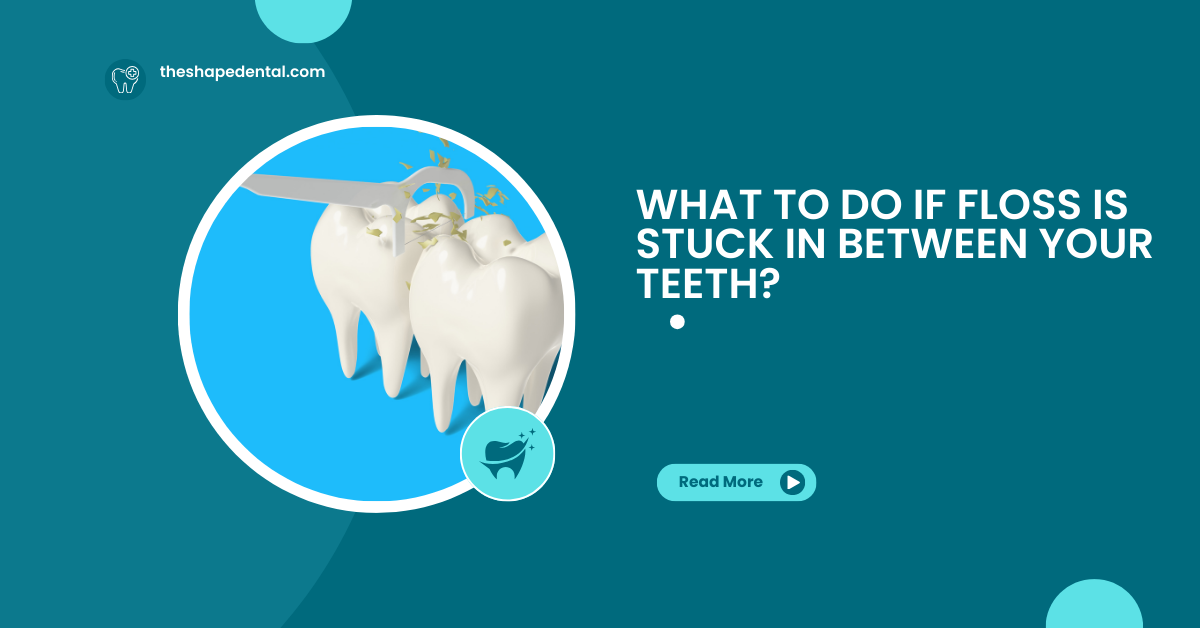
Flossing is a key part of daily dental hygiene and long-term dental health. It helps remove plaque and food particles that brushing alone cannot reach. Even when you floss properly, floss sometimes gets stuck, leaving you uncomfortable and unsure what to do next. When floss is stuck in your teeth, pulling harder can seem tempting, but that often causes more harm than good.
Floss Is Stuck in Between Your Teeth
This article is worth reading because it explains why floss gets stuck, how to safely remove floss stuck between your teeth, and when it is time to see a dentist. It also explains how dental care such as professional cleaning, repair of restorations, or installation of crowns can affect flossing and oral hygiene.
Why Floss Gets Stuck Between Teeth
Floss does not usually get stuck without a reason. When floss gets stuck between teeth, it often signals an issue with spacing, tooth surfaces, or dental restorations.
Teeth that are overcrowded or tightly spaced leave little room for floss to glide between teeth. Rough enamel caused by tooth decay or damage to your teeth can also snag floss. Dental restorations such as a crown or filling may have uneven edges if the installation or repair was imperfect. In addition, using unwaxed floss or snapping floss through your teeth instead of gently sliding it can increase the chance that floss will get stuck.
If floss gets stuck between teeth repeatedly in the same area, a dentist should evaluate the tooth to prevent damage to your teeth or gums.
What Not to Do When Floss Is Stuck
When floss is stuck in your teeth, the natural reaction is often to pull the floss harder. This can irritate the gum and cause floss to break off and get lodged deeper.
Avoid these mistakes:
- Do not pull the floss straight up with force
- Do not floss and pull aggressively when it resists
- Do not use sharp objects to remove stuck floss
- Do not dig into the gum with metal tools
- Do not panic if it’s stuck and keep tugging
Using too much force on dental floss can cause damage to your teeth or gums and make removal more difficult.
Safe Steps to Remove Floss Stuck Between Your Teeth
Most cases of floss stuck between teeth can be handled at home with patience and gentle movements.
Start by relaxing your hands and checking whether the floss is wedged tightly between your teeth. Move the floss back and forth using small motions, then pull the floss out sideways instead of upward. Rinsing with warm water may help loosen the floss and remove trapped plaque.
If part of the floss is still accessible, waxed floss may help guide the floss out more easily. Dental tape can also be helpful for tight contact points. If you cannot get floss unstuck after several attempts, stop to avoid injury.
Using Dental Tools to Safely Remove Stuck Floss
Sometimes floss alone is not enough to remove a piece of floss stuck between teeth. Certain dental tools can help when used carefully.
A water flosser can help loosen the floss using gentle water pressure. Interdental brushes are useful if there is enough space to fit them comfortably. Floss thread or floss picks can help guide the floss back out. Wooden interdental sticks can be used with care, but should never be forced.
Avoid sharp household tools. If something stuck will not come out easily, professional dental care is the safest option.
What to Do If Floss Breaks and Gets Stuck
Dental floss is strong, but floss may break off and get lodged if it catches on a rough surface. A tiny piece or piece of floss stuck under the gum can cause irritation.
If floss broke:
- Rinse your mouth thoroughly to flush debris
- Use a water flosser to loosen the floss
- Try an interdental brush gently
- Avoid forcing the floss or digging into the gum
If you can’t get the floss out or notice swelling or pain, a dental professional should evaluate the area.
When You Should See a Dentist
Home care is not always enough when floss gets stuck in between your teeth. Dentists handle this issue regularly and can safely remove stuck floss without discomfort.
Schedule an appointment if:
- Floss is wedged between your teeth and will not move
- You feel pain in your teeth or gums
- Gum tissue swells or bleeds
- Floss gets stuck between the teeth often
- The floss is caught near dental implants or under a crown or filling
A dentist can also determine whether dental restorations need repair or adjustment.
How Dentists Remove Stuck Floss
Removing stuck floss at a dental office is usually quick and gentle. A dentist uses specialized tools designed to safely remove floss without harming teeth or gums.
During the visit, the dentist may check for plaque buildup, tooth decay, or rough edges on dental restorations. Minor repair or smoothing may be done if needed. Guidance on proper flossing techniques is often provided to prevent future issues.
How to Prevent Floss From Getting Stuck in the Future
Preventive dental care makes flossing easier and more comfortable. Regular dental cleaning helps reduce plaque and rough surfaces that trap floss.
To prevent floss being stuck:
- Choose the right type of floss for your teeth
- Use waxed floss for tight spaces
- Avoid snapping floss through your teeth
- Adjust the angle of the floss when cleaning
- Replace fraying floss with a clean section of floss
- Maintain routine dental hygiene visits
If dental restorations are the cause, proper repair or adjustment can resolve the problem.
Proper Flossing Technique for Tight Teeth
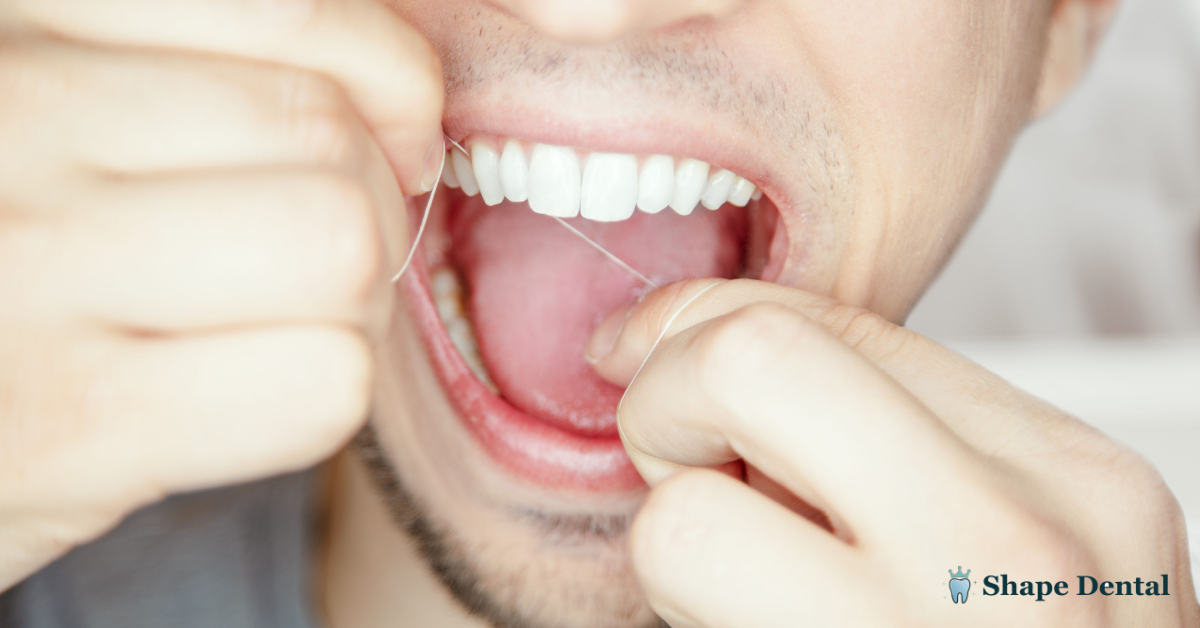
Using the correct flossing technique helps floss glide between teeth smoothly and protects the gum.
Use about 18 inches of floss and guide the floss gently between your teeth. Curve it around the tooth surface and slide it under the gumline carefully. Move the floss up and down to remove plaque, then repeat with a clean section of floss.
Proper flossing supports oral hygiene and helps prevent gum disease.

When to Visit a Family Dentist in Georgetown, TX
If flossing becomes uncomfortable or frustrating, professional dental care can help. Shape Dental provides comprehensive dental care in Georgetown, TX for patients of all ages. Services include preventive cleaning, dental repair, installation of crowns, and routine exams. The focus is on gentle care and long-term dental health.
Common Questions About Floss Getting Stuck
Is floss getting stuck bad for oral health?
Floss stuck between teeth is common. Ongoing problems should be evaluated by a dentist.
Can floss damage the gum?
Yes, forcing the floss can irritate the gum and damage teeth or gums.
Should I stop flossing if floss keeps getting stuck?
No. Floss your teeth daily and adjust floss types or technique if needed.
Can trapped floss cause infection?
Yes. Trapped floss can hold plaque and bacteria if not removed.